
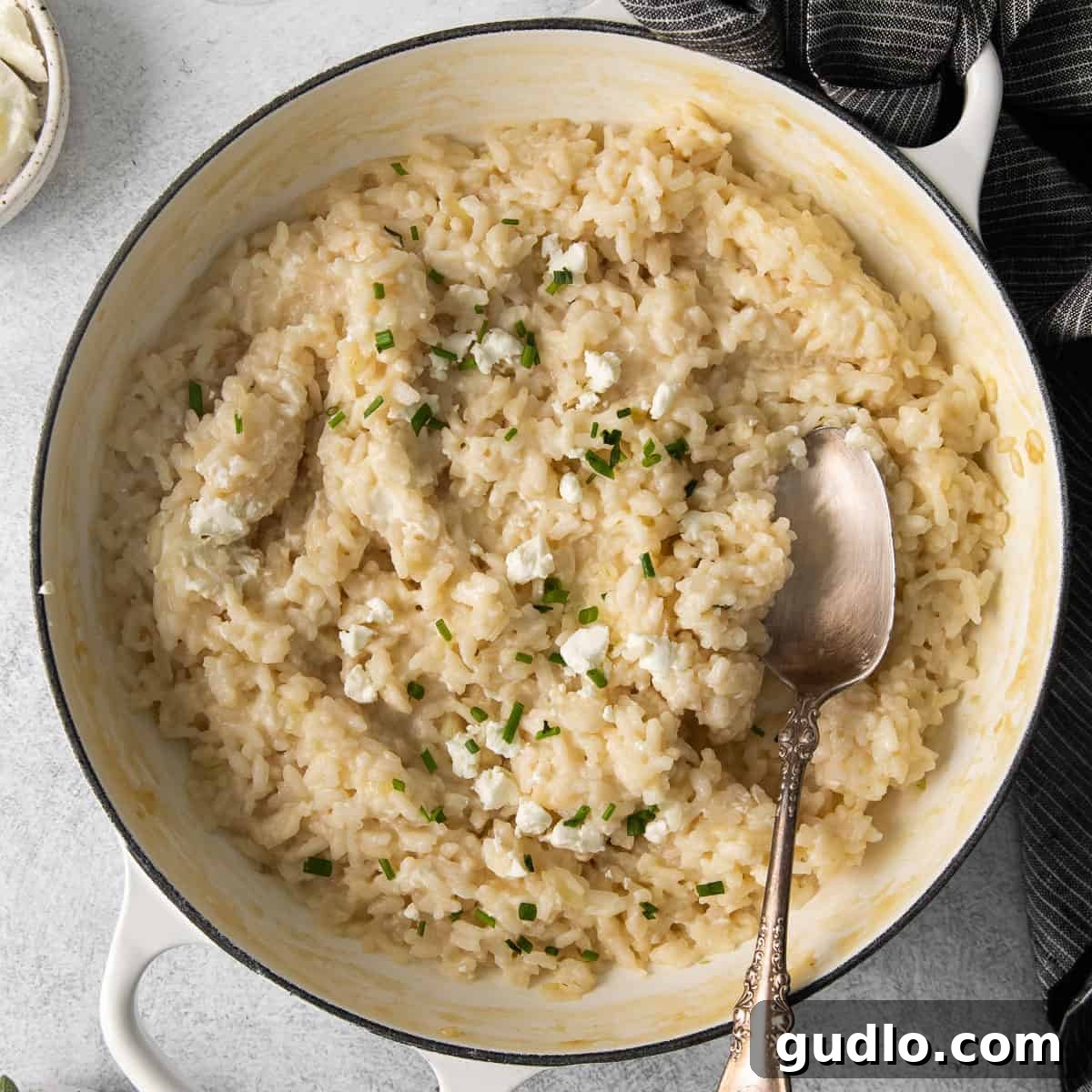
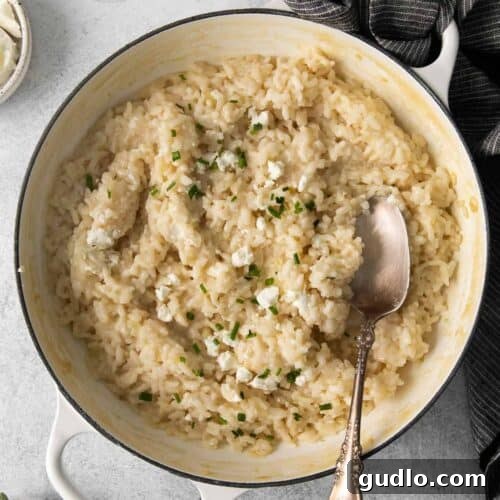
Prepare to fall in love with this incredibly rich and creamy goat cheese risotto. Crafted with just a handful of simple ingredients, this dish delivers an explosion of flavor and a luxuriously smooth texture that will impress even the most discerning palates. It’s an approachable recipe that transforms humble ingredients into an extraordinary meal, making it perfect for both weeknight dinners and special occasions.
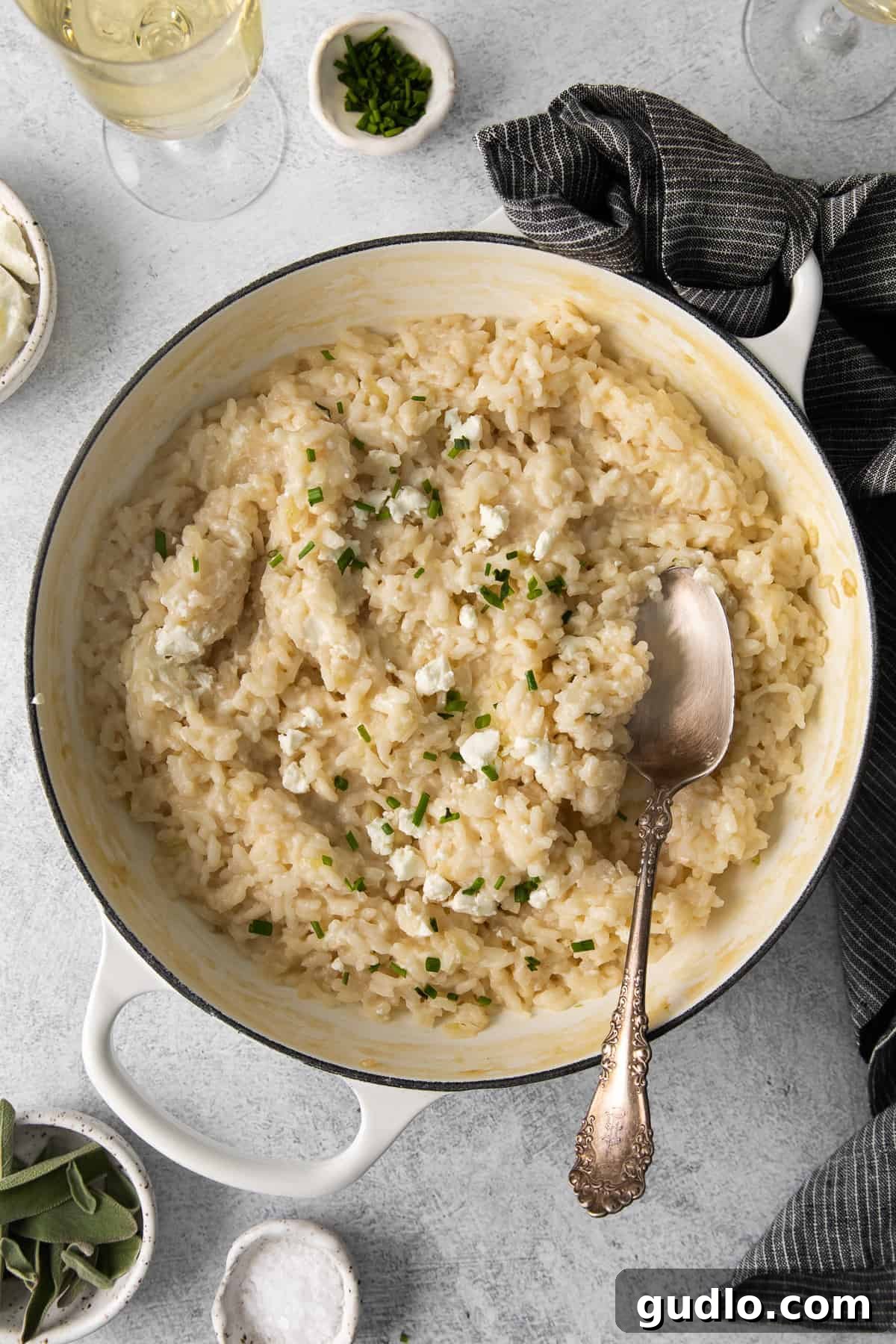
Easy & Elegant Goat Cheese Risotto Recipe
Dinner is officially served! Tonight, we’re featuring a dish that embodies comfort, elegance, and incredible flavor: Goat Cheese Risotto. While the word “risotto” might conjure images of complex, chef-level cooking, rest assured that this recipe is surprisingly simple to master. It’s a rewarding culinary journey that results in a wonderfully creamy and utterly delicious meal.
By following this straightforward guide, you’ll quickly gain the confidence and skills needed to prepare a perfect goat cheese risotto, transforming you into a home cooking pro in no time. Forget the intimidation; embrace the joy of creating this spectacular dish!
Why You’ll Absolutely Love This Creamy Risotto
A Vegetarian Delight: Searching for a truly satisfying and flavorful meal that’s entirely meat-free? Look no further! This goat cheese risotto is packed with rich flavors and a hearty texture, proving that vegetarian dishes can be incredibly fulfilling and leave you completely satisfied.
Effortless Dinner Idea: Despite its sophisticated appeal, this recipe is designed for ease. With just a few simple steps and a bit of mindful stirring, a gourmet-quality dinner will be ready to grace your table, perfect for busy weeknights or relaxed weekend gatherings.
Simple, Yet Sophisticated: This recipe truly demonstrates that you don’t need an extensive list of exotic ingredients to create a truly delicious and elevated meal. The magic lies in the quality of a few core components and the classic risotto technique, resulting in a dish that feels special without being overly complicated.
Irresistibly Creamy Texture: The beauty of risotto lies in its velvety smooth consistency. Our recipe ensures a perfectly creamy outcome, where each grain of rice is tender yet still retains a slight al dente bite, enveloped in a luscious, cheesy sauce.
Distinctive Flavor Profile: The star of this dish, goat cheese, introduces a delightful tang and a subtle earthiness that perfectly balances the richness of the risotto. Fresh sage adds an aromatic herbaceous note, creating a harmonious and memorable flavor experience.
Essential Ingredients for Your Goat Cheese Risotto
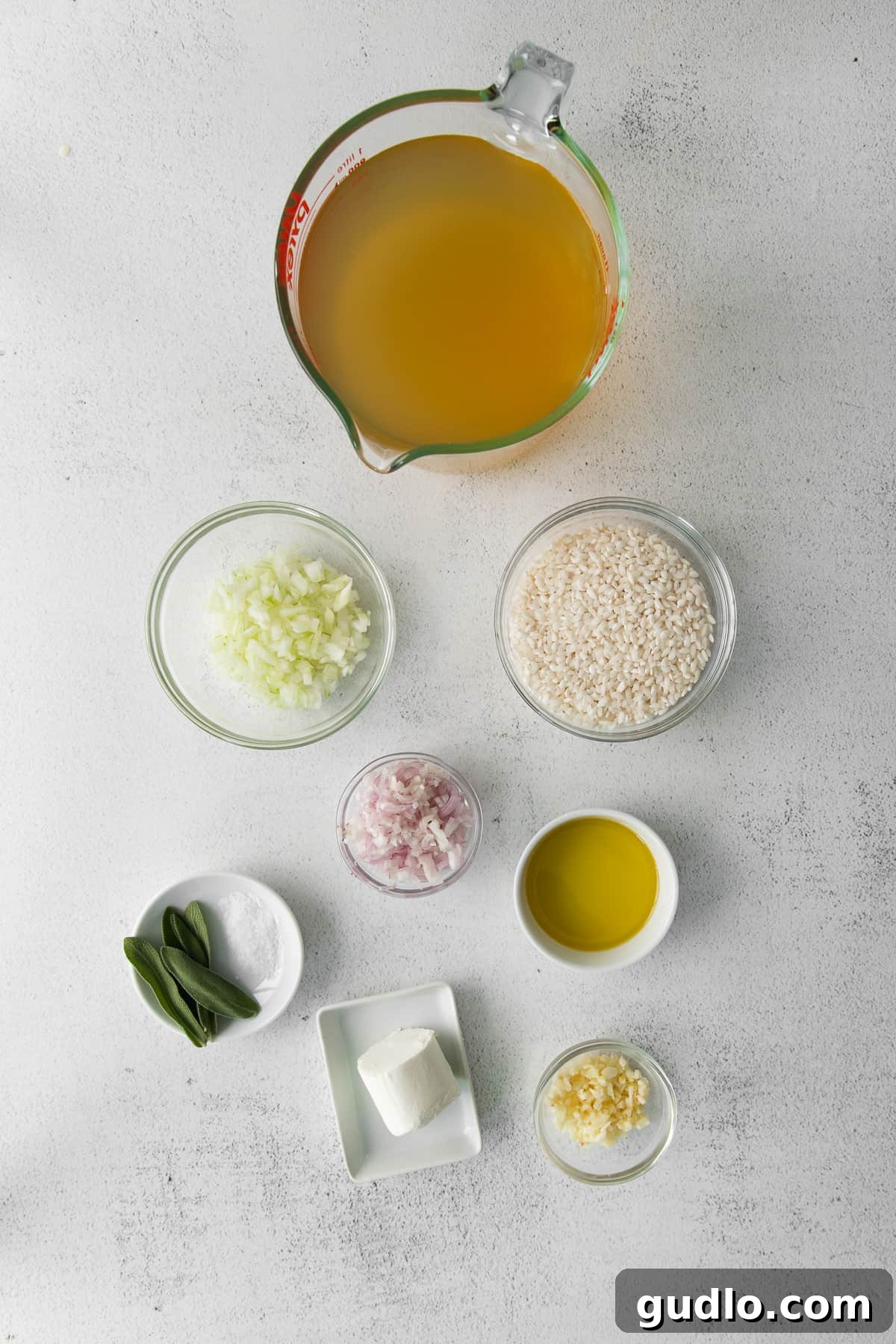
Crafting the perfect risotto starts with selecting the right ingredients. Each component plays a crucial role in building the layered flavors and achieving that signature creamy texture. Here’s a closer look at what you’ll need and why:
- Olive Oil or Butter: This forms the foundational fat for sautéing our aromatics. Extra virgin olive oil imparts a delicate, fruity note, while butter offers a rich, nutty depth. Feel free to use either, or even a combination, depending on your preference for the base flavor.
- Onion and Shallot: These fragrant alliums are absolute musts for creating an incredible base flavor. Finely minced, they caramelize gently to add sweetness and complexity, building the savory backbone of the risotto. Using both provides a more nuanced aromatic profile.
- Garlic: No savory dish is complete without it! Freshly minced garlic contributes a pungent, aromatic warmth that elevates the overall taste. Always opt for fresh garlic cloves for the best and most vibrant flavor.
- Fresh Sage: This herb is the secret weapon in this dish, adding an indispensable touch of freshness and a distinct earthy, slightly peppery aroma that beautifully complements the goat cheese. While dried sage can be used in a pinch, fresh sage truly makes a difference in brightening the flavor profile.
- Arborio Rice: This specific variety of short-grain Italian rice is non-negotiable for authentic risotto. Its high starch content (amylopectin) is key to achieving that characteristic creamy consistency as it releases starch when gently stirred. Do not substitute with other types of rice like long-grain or basmati, as they will not yield the desired texture.
- Broth: The liquid component is crucial for cooking the rice and infusing flavor. Any good quality broth will work here. Vegetable broth keeps the dish strictly vegetarian, while chicken or even beef broth (our personal preference for depth, though not vegetarian) can add extra richness. For an adventurous twist, consider our homemade Parmesan broth for an added layer of umami. Ensure your broth is warm before adding it to the rice; this helps maintain a consistent cooking temperature and promotes even absorption.
- Goat Cheese: Last but certainly not least, the star of the show! Goat cheese, with its distinct tangy, slightly earthy flavor and wonderfully creamy texture, is what truly defines this risotto. We recommend a soft, fresh chèvre that melts beautifully into the rice, imparting its unique character. You can buy it pre-crumbled or crumble a block yourself for a more rustic touch.
How to Make Creamy Goat Cheese Risotto: A Step-by-Step Guide
Making risotto is a meditative and rewarding process that requires a little patience but promises a magnificent result. Follow these steps closely for a truly unforgettable goat cheese risotto.
Step 1: Prepare Your Aromatics
Begin by heating 1 tablespoon of olive oil (or butter) in a medium-sized, heavy-bottomed pot or saucepan over medium-high heat. Once the oil shimmers or the butter is melted and slightly foamy, add your finely minced onion, shallot, and a quarter teaspoon of salt. Sauté these aromatics, stirring frequently, until they become translucent and softened, which typically takes about 2-3 minutes. Avoid browning them, as we want a sweet, gentle flavor. Next, add the minced garlic and continue to cook for another minute until fragrant, being careful not to burn it.
Step 2: Infuse the Broth with Sage
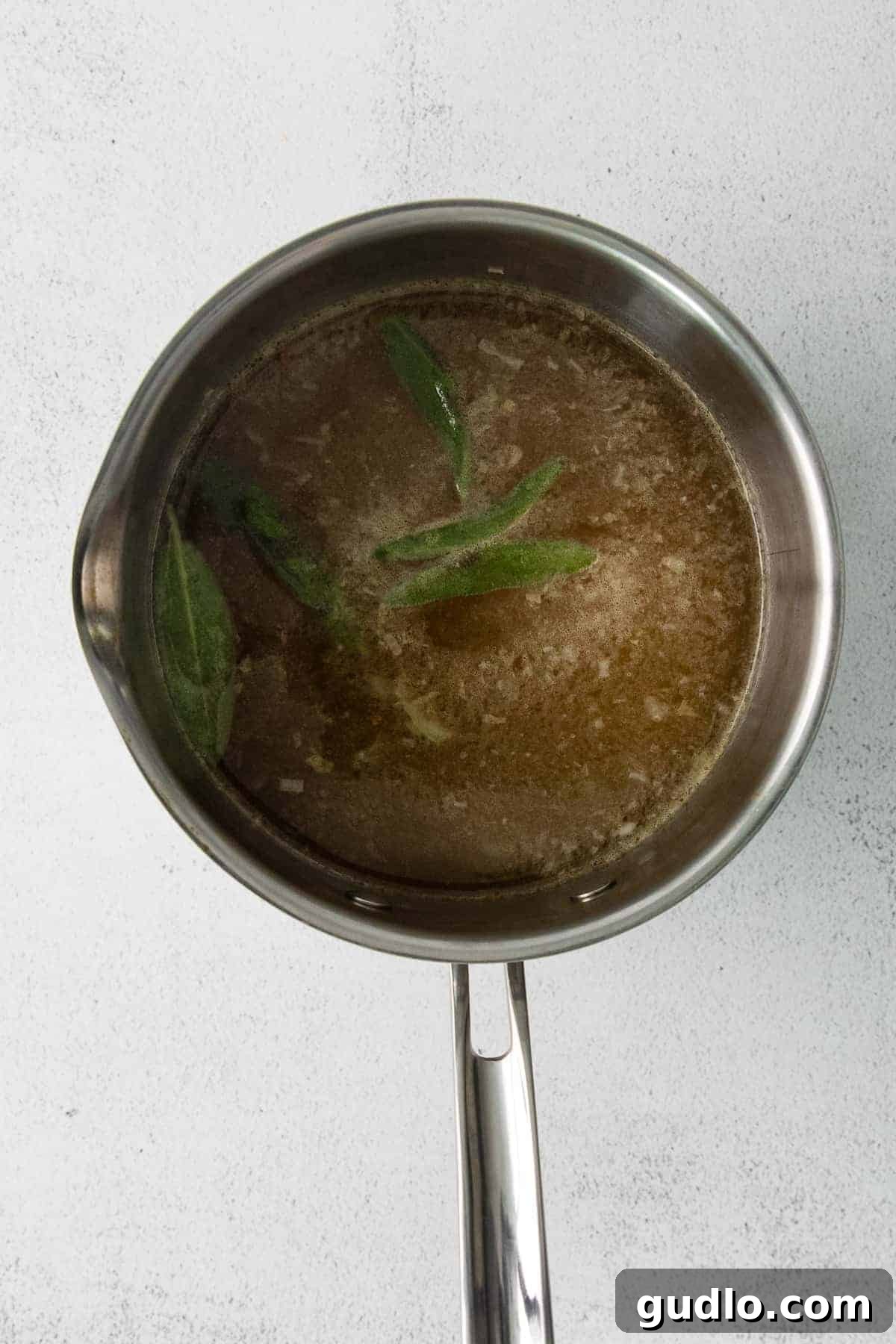
After the aromatics are cooked, add the fresh sage leaves to the pot and toss them gently with the softened vegetables. Pour in the broth and bring it to a gentle simmer. Once simmering, reduce the heat to low, allowing the sage to infuse the broth with its aromatic essence while keeping the broth warm. Maintaining warm broth is crucial for consistent cooking of the rice, so keep it at a low simmer throughout the risotto process.
Step 3: Toast the Arborio Rice (Tostatura)
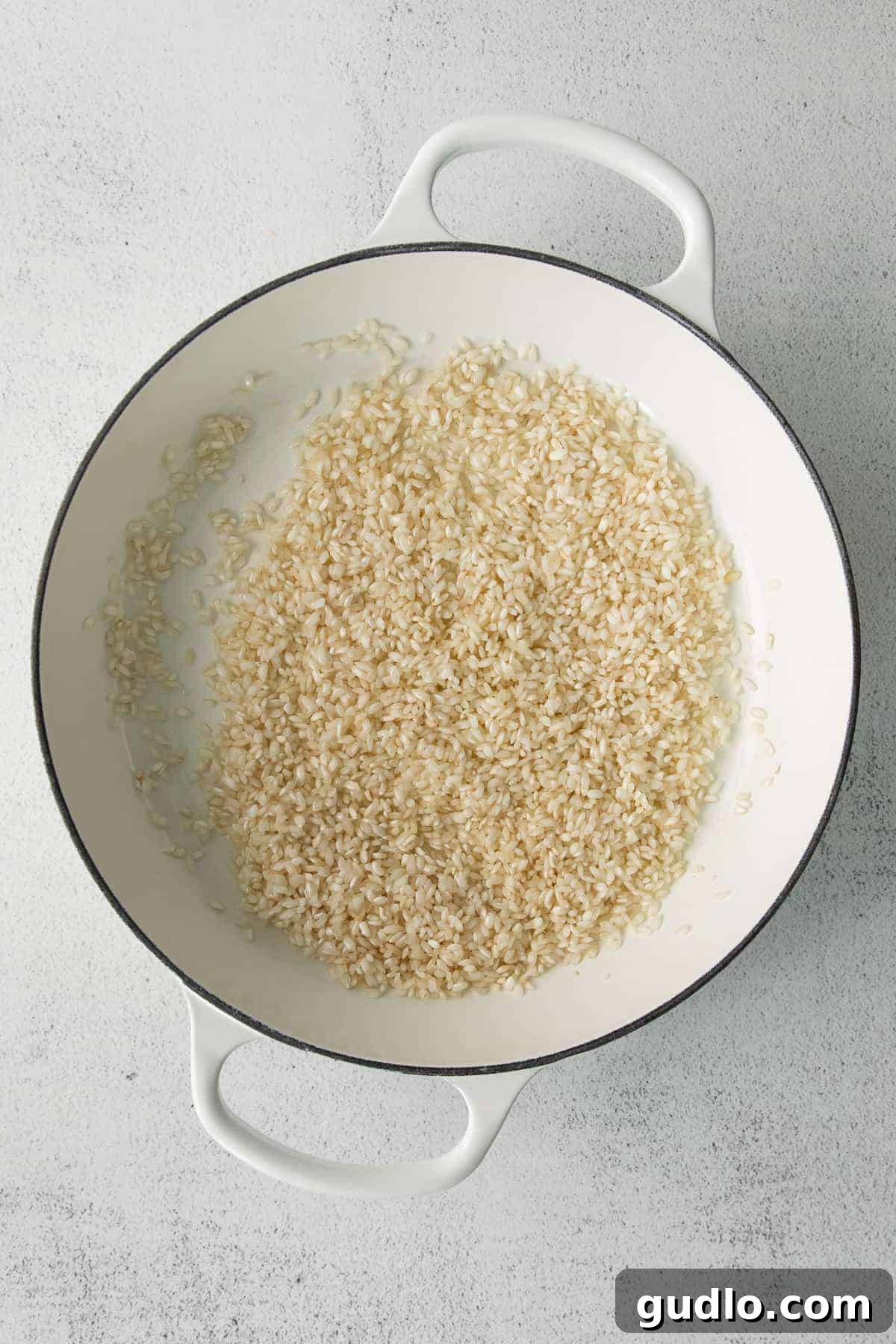
In a separate large skillet or wide, heavy-bottomed pan, heat the remaining 1 tablespoon of olive oil over medium heat. Once the oil is fragrant, add the arborio rice. Toast the rice for 1-2 minutes, stirring constantly. This step, known as “tostatura,” lightly toasts the exterior of each grain, which helps it maintain its shape and prevents it from becoming mushy during cooking, while also adding a subtle nutty flavor.
Step 4: The Risotto Method – Gradual Broth Addition
Now for the most engaging part: cooking the risotto! Before you begin, carefully remove and discard the sage leaves from the simmering broth. Using a ladle, add about ½ cup of the warm broth (including some of the cooked onions, shallots, and garlic) to the toasted rice in the skillet. Stir continuously over medium heat. The goal is to allow the rice to slowly absorb the liquid while releasing its starches, which creates the creamy texture.
Continue this process: add another ½ cup of broth, stir until it’s almost completely absorbed, then repeat. This patient, gradual addition and constant stirring is vital. After approximately 20-25 minutes, you will have used about 3.5 cups of broth. At this point, the rice should be nearly cooked. Taste a grain; it should be al dente – tender with a slight bite in the center, not hard or chalky. If it’s still too firm, continue adding broth, ¼ to ½ cup at a time, until it reaches your desired consistency. You may need up to an additional ½ to 1 cup of broth, depending on your rice and heat level.
Your #1 Risotto Master Tip!
Patience is Paramount! Do not rush the cooking process. Maintain a consistent medium heat throughout the gradual broth addition. Cooking the risotto too quickly or over high heat will cause the liquid to evaporate before the rice has a chance to properly release its starches and cook through, resulting in unevenly cooked, hard rice with a soupy consistency. Keep stirring gently and steadily!
Step 5: Incorporate the Goat Cheese
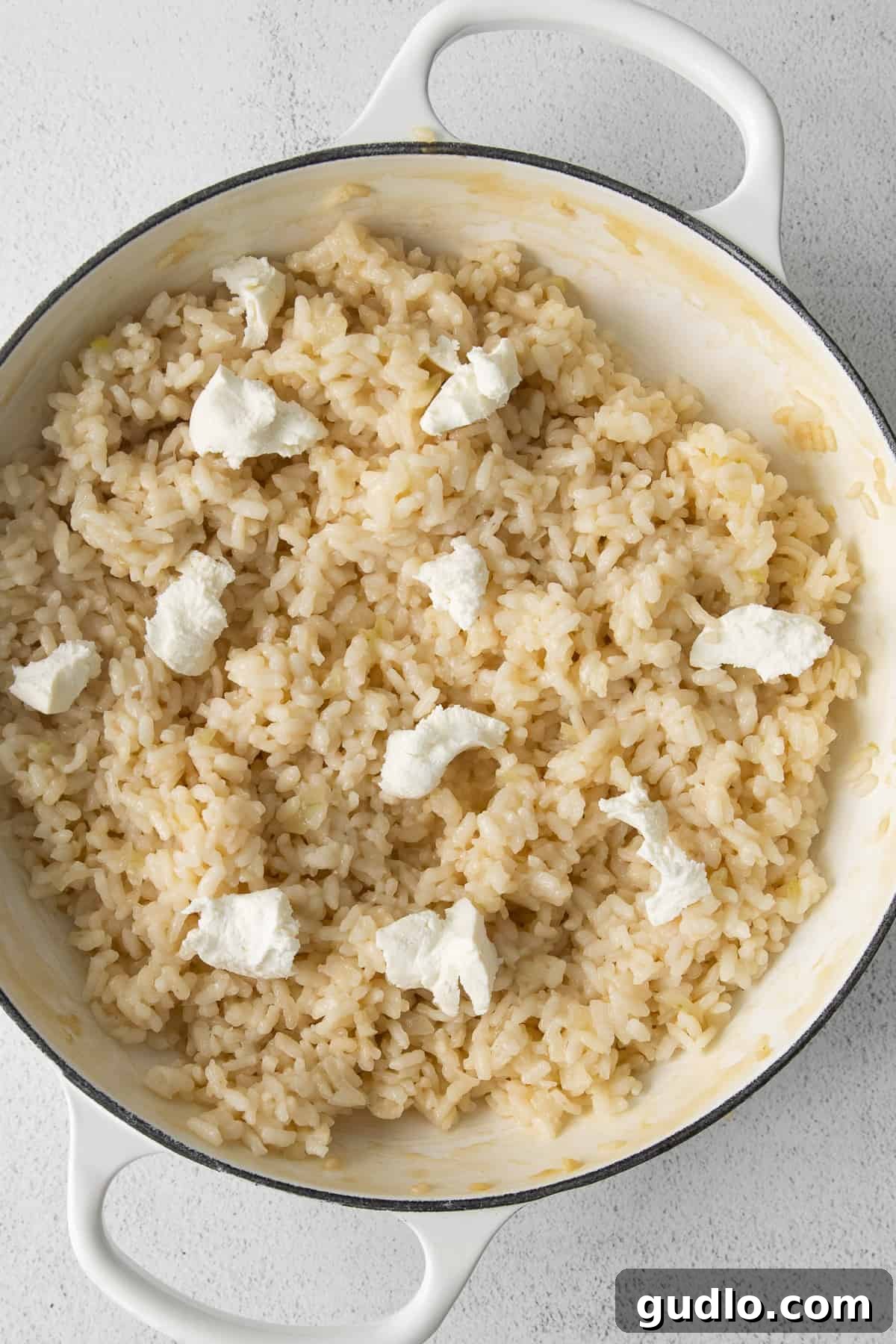
Once the arborio rice has achieved its desired al dente texture and the broth is mostly absorbed, it’s time for the star ingredient. Remove the skillet from the heat. Add the 2 ounces of goat cheese directly into the hot risotto. We love to crumble it evenly over the rice before gently stirring. The residual heat from the risotto will cause the goat cheese to melt beautifully, creating an even creamier, tangier, and more luxurious finish. This is known as “mantecatura” – the final step that brings ultimate creaminess.
Step 6: Serve and Savor!
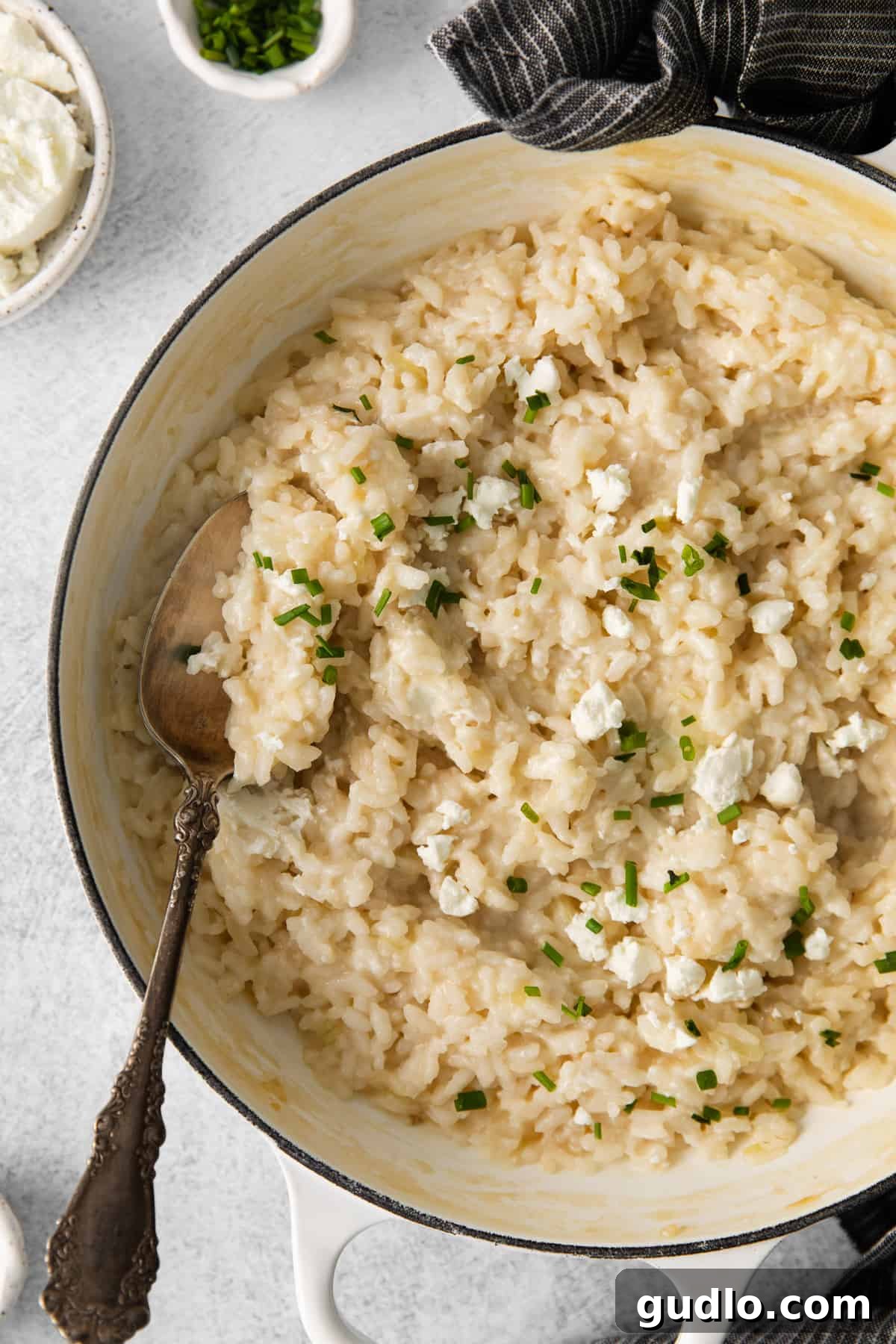
Dish out your magnificent goat cheese risotto immediately. For an extra flourish and intensified flavor, garnish each serving with additional crumbled goat cheese, delicate ribbons of fresh sage, and a generous crack of freshly ground black pepper. Serve warm and enjoy the fruits of your labor!
Storage & Reheating Tips for Your Risotto
While risotto is best enjoyed fresh off the stove, you can certainly save leftovers. To store, allow the goat cheese risotto to cool completely to room temperature. Then, transfer it into an airtight container and seal it tightly. Store in the refrigerator for up to 3-5 days.
To reheat: Risotto tends to thicken significantly in the fridge. To restore its creamy texture, transfer the desired portion back into a medium pot or skillet. Add a splash of broth (about ¼ to ½ cup per serving) or even a little water, and reheat over medium-low heat, stirring constantly, until hot and creamy again. You may need to add more liquid gradually until it reaches your desired consistency.
Can You Freeze Risotto? (Our Honest Advice)
Technically, you can absolutely freeze cooked risotto. However, do we recommend it for optimal texture and flavor? Unfortunately, not wholeheartedly. Cooked arborio rice, specifically designed for its starch release and creamy texture, can often disintegrate during the freezing and thawing process. This typically results in a mushier, less desirable texture that loses its signature al dente bite (speaking from regrettable experience!). While it’s edible, it won’t have the same exquisite quality as freshly made risotto. For the best experience, enjoy it within a few days from the refrigerator.
Serving Suggestions & Perfect Pairings
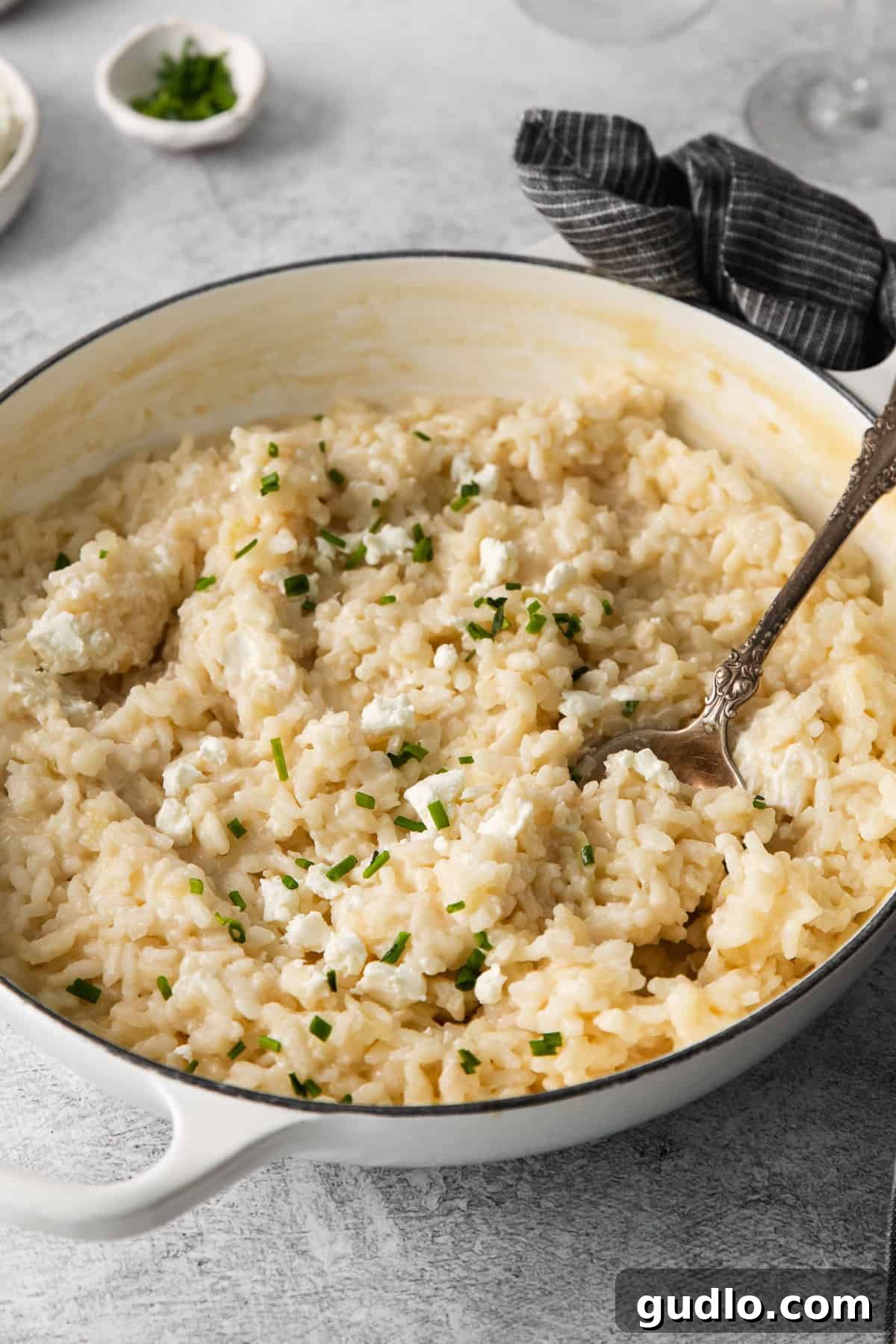
Goat Cheese Risotto is a satisfying meal on its own, but it also pairs beautifully with a variety of accompaniments. For a complete and balanced meal, consider serving it alongside a crisp green salad with a light vinaigrette. A side of crusty bread is perfect for soaking up any extra creamy sauce.
For wine pairings, a crisp, dry white wine like a Sauvignon Blanc or an unoaked Chardonnay would complement the tanginess of the goat cheese beautifully. For something a little different, a light-bodied Pinot Noir could also work to contrast the richness of the dish.
Frequently Asked Questions About Risotto
Have more questions about perfecting your risotto? Here are some common queries:
- What kind of pot is best for risotto? A heavy-bottomed pot or a wide skillet is ideal. The heavy bottom helps distribute heat evenly, preventing scorching, while a wider surface area allows for better evaporation and more consistent stirring.
- Can I use other types of rice? As mentioned, arborio rice is crucial. Other types of rice, such as long-grain, basmati, or jasmine, do not have the same high starch content or ability to absorb liquid and release starch gradually, which is essential for risotto’s creamy texture.
- Is goat cheese risotto healthy? This risotto is a wonderful source of carbohydrates, healthy fats from olive oil, and protein from the cheese. As with any rich dish, moderation is key, but it can certainly be part of a balanced diet, especially for vegetarians.
- Can I make this dairy-free? While the goat cheese is central to this recipe, you could experiment with dairy-free cream cheeses or nut-based “goat cheese” alternatives, though the flavor profile would certainly change. Ensure to use vegetable broth.
- Can I add vegetables to this risotto? Absolutely! Risotto is very versatile. You could sauté mushrooms, asparagus, peas, or spinach with the aromatics or stir them in during the last few minutes of cooking for added nutrition and flavor.
More of Our Favorite…
Cheesy Vegetarian Meals You’ll Adore
If you’re a fan of rich, cheesy, and satisfying vegetarian dishes, you’ll love exploring these other delectable recipes from our collection:
- The Best Homemade Mac and Cheese
- Hearty Broccoli and Cheese Soup
- Creamy Alfredo Sauce with Cream Cheese
- Trendy Baked Feta Pasta
Goat Cheese Risotto
Prep:
15 minutes
Cook:
30 minutes
Total:
45 minutes
Ingredients
- 2 tablespoons olive oil, divided
- ¼ large white onion, minced
- 1 small shallot, minced
- 3 cloves garlic, smashed and minced
- ½ teaspoon salt
- 5 fresh sage leaves, + more for topping
- 4 cups broth, any kind (we used chicken broth)
- 1 cup arborio rice
- 2 oz. goat cheese, + more for topping
Instructions
-
Heat a large saucepan over medium-high heat. Add 1 tablespoon of olive oil to the saucepan.
-
When the olive oil is fragrant, add the onion, shallot, and ¼ teaspoon of salt to the saucepan. Stir and sauté for 2-3 minutes until translucent. Add the garlic and cook for another minute until fragrant, being careful not to burn it.
-
Next, add the sage leaves to the saucepan and toss. Then, pour in the broth. Bring the broth to a gentle boil and then turn the heat down to low to keep it warm.
-
Heat a separate large skillet or wide pan over medium heat and add the remaining 1 tablespoon of olive oil to the skillet.
-
When the olive oil is fragrant, add the arborio rice to the skillet and toast the rice for 1-2 minutes, stirring constantly, until the edges of the grains become translucent.
-
Prepare the risotto. Remove the sage leaves from the broth. Begin adding the warm broth to the rice, ½ cup at a time. Stir continuously over medium heat until the broth is almost completely absorbed by the rice before adding the next ladleful. Repeat this process until you have used approximately 3.5 cups of broth, which should take around 20-25 minutes. Do not rush this step, as patient stirring is key to creaminess. Taste a grain of rice to check for doneness; it should be tender with a slight al dente bite. If it’s still too firm, continue adding broth in ¼ to ½ cup increments until it reaches your desired texture. You may need up to an additional ½ cup to 1 cup of broth.
-
Once the arborio rice is fully cooked to your liking, remove the skillet from the heat. Add the goat cheese to the risotto and stir gently until the goat cheese has melted completely, creating a wonderfully creamy texture. Serve the risotto immediately with additional crumbled goat cheese, fresh ribbons of sage, and freshly cracked black pepper.
Tips & Notes
- Ensure you cook your arborio rice over consistent medium heat. If the heat is too high, the liquid will evaporate too quickly, and the rice won’t soften properly, leading to an undercooked, hard interior.
- The exact amount of broth needed can vary. After using 3.5 cups, taste your rice. If it’s still too hard, continue adding broth, up to an additional 1 cup, until the rice reaches your preferred al dente texture.
- Always use warm broth. Adding cold broth will cool down the risotto, interrupting the cooking process and affecting the final texture.
- Stirring is important, but you don’t need to stir constantly for 25 minutes straight. Frequent stirring (every 30-60 seconds) is sufficient to ensure even cooking and starch release.
Nutrition
Nutrition information is automatically calculated and should be used as an approximation only.
Love this recipe? Share your thoughts below!
Don’t forget to tag your culinary creations on social media with the hashtag #cheeseknees. We’d absolutely love to see your delicious goat cheese risotto!