
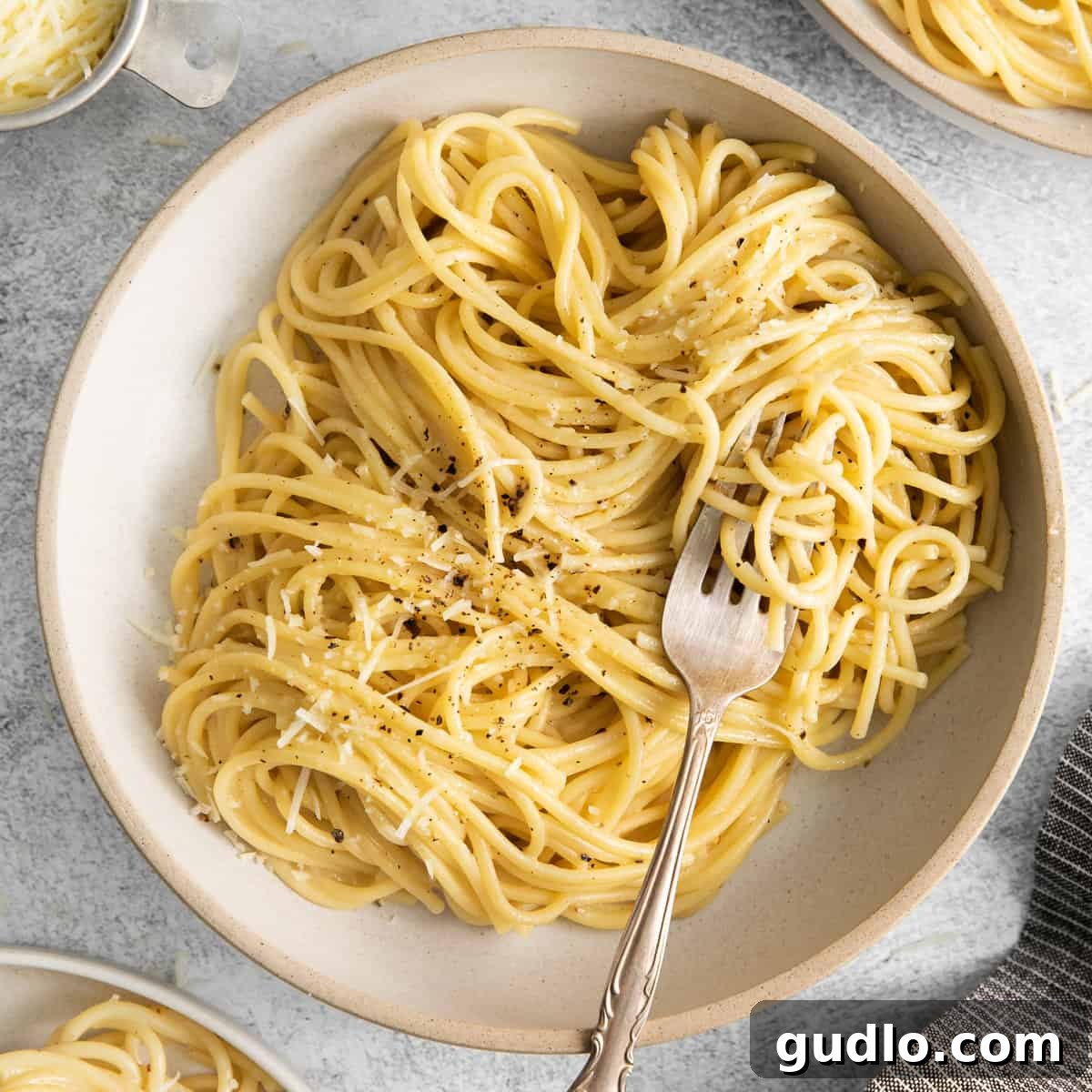
There’s a reason why the simple Roman dish of Cacio e Pepe pasta has captivated hearts and palates worldwide. Translating simply to “cheese and pepper,” this iconic recipe proves that culinary excellence doesn’t require a long ingredient list or complicated techniques. With just a few staple ingredients and minimal effort, you can whip up an incredibly flavorful, deeply satisfying meal in under 20 minutes. It’s the quintessential weeknight hero and a testament to the magic that happens when quality ingredients are treated with respect.
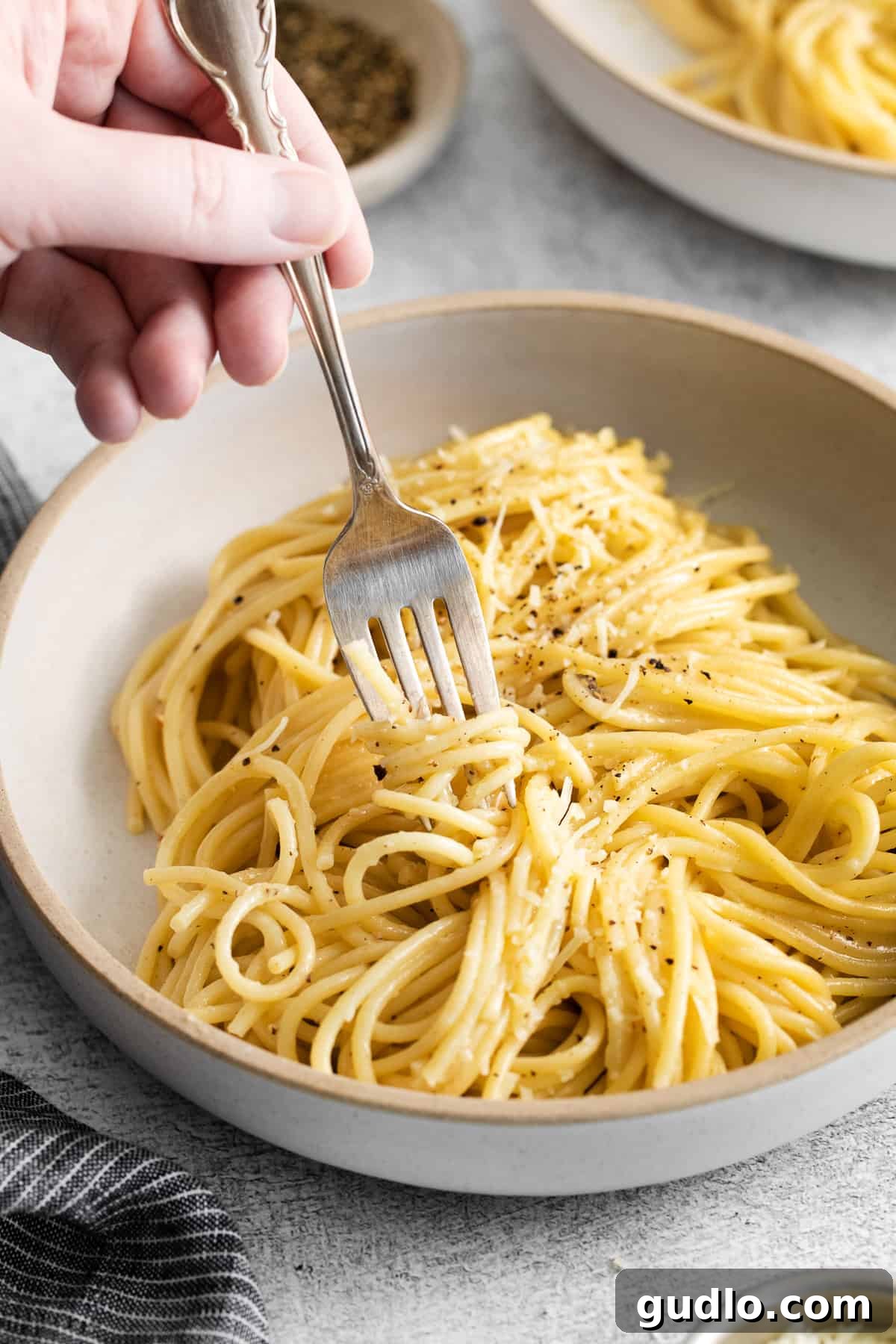
Mastering the Art of Cacio e Pepe: A Timeless Roman Classic
When the craving for something truly comforting yet exquisitely simple strikes, Cacio e Pepe is your answer. This beloved Roman pasta dish is far more than the sum of its parts. It’s a symphony of savory, sharp Pecorino Romano (or Parmesan), fiery fresh-cracked black pepper, and perfectly cooked pasta, all bound together by a luscious, silky emulsion created with starchy pasta water. It’s a dish that demands attention to detail but rewards you with an unparalleled depth of flavor, proving that sometimes, less truly is more. Whether you’re a seasoned chef or a beginner in the kitchen, mastering Cacio e Pepe is an incredibly rewarding experience.
Unveiling Cacio e Pepe: History, Flavor, and Simplicity
Cacio e Pepe’s origins trace back to ancient Rome, where it was a staple food for shepherds. Its ingredients — dried pasta, aged Pecorino Romano cheese, and black pepper — were non-perishable and easy to carry, making it a practical and nourishing meal for those spending long periods away from home. The dish’s enduring popularity lies in its incredible simplicity and the profound flavors that emerge from such humble components. It’s a true Roman culinary gem, celebrated for its minimal ingredients yet maximum impact.
Cacio e Pepe directly translates from Italian to “cheese and pepper.” True to its name, this elegant dish is primarily crafted from Pecorino Romano cheese (or Parmesan), freshly ground black pepper, and pasta, all brought together with the magical addition of starchy pasta water. While some modern variations might include a touch of butter or olive oil for richness, the essence remains these three core ingredients.
Despite its incredibly simple composition, Cacio e Pepe delivers a surprisingly complex and robust flavor profile. It’s intensely savory and umami-rich from the Pecorino Romano, complemented by a vibrant, pungent warmth from the freshly cracked black pepper. The texture is creamy and luscious, coating each strand of pasta beautifully. It’s a comforting, slightly sharp, and subtly spicy experience that is deeply satisfying and utterly addictive.
The secret to Cacio e Pepe’s characteristic creamy sauce lies entirely in the starchy pasta water. As pasta cooks, it releases starch into the water. This starchy liquid, when combined with grated Pecorino Romano and black pepper, creates a beautiful emulsion. The starch helps to bind the cheese and pepper, preventing the cheese from clumping and forming a smooth, velvety sauce that clings perfectly to the pasta. It’s a culinary alchemy that transforms humble ingredients into something extraordinary.
Traditionally, Cacio e Pepe is made with long, thin pasta shapes like spaghetti or tonnarelli. These shapes provide ample surface area for the creamy sauce to adhere, ensuring every bite is bursting with flavor. However, other long pasta types like bucatini, tagliolini, or even thicker shapes like rigatoni or penne can work beautifully, offering different textural experiences while still capturing the essence of the dish.
Why You’ll Absolutely Love This Cacio e Pepe Recipe!
Prepare to add this Cacio e Pepe recipe to your permanent rotation. It’s more than just a meal; it’s an experience that’s designed for convenience, flavor, and culinary versatility.
Speedy 15-Minute Meal: Forget long hours in the kitchen! This recipe is your ultimate solution for quick and easy weeknight dinners. From pot to plate, you can have a gourmet-tasting meal ready in mere minutes, making it perfect for busy evenings without compromising on quality or flavor.
Explosion of Flavor: The combination of nutty, salty Pecorino Romano cheese (or Parmesan) and the bold, aromatic punch of freshly cracked black pepper creates a flavor profile that is both deeply comforting and incredibly sophisticated. Each bite delivers a harmonious blend of richness and warmth that will tantalize your taste buds and leave you craving more.
Incredibly Versatile: While phenomenal on its own, Cacio e Pepe serves as a fantastic base for customization. Easily elevate this dish by incorporating your favorite proteins such as succulent grilled shrimp, pan-seared chicken, or crispy pancetta. For a nutritional boost, sautéed vegetables like vibrant spinach, tender asparagus, or earthy mushrooms can be seamlessly added, making it a truly adaptable meal for any occasion.
Pantry-Friendly Ingredients: One of the greatest appeals of Cacio e Pepe is that it relies on ingredients you likely already have on hand: pasta, cheese, pepper, and a touch of olive oil or butter. This makes it an ideal spontaneous meal solution, ensuring you can enjoy a delicious, authentic Italian dish without a last-minute grocery run.
Essential Ingredients for an Authentic Cacio e Pepe
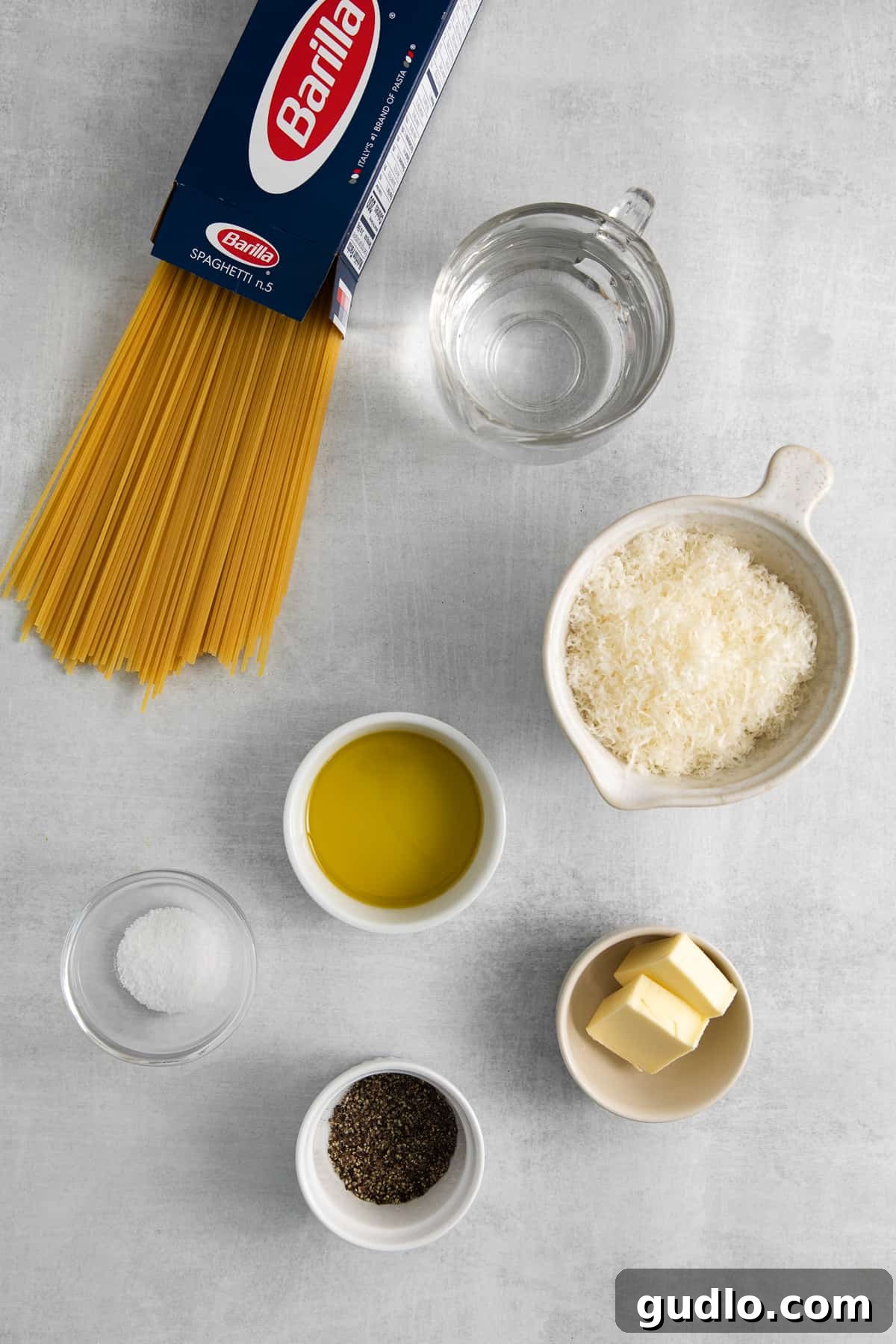
Creating an exceptional Cacio e Pepe hinges on the quality and preparation of a few key ingredients. Each component plays a vital role in building the dish’s signature flavor and creamy texture. Here’s a closer look at what you’ll need and why it matters:
- Spaghetti Noodles (or your preferred long pasta): While traditional Cacio e Pepe often features tonnarelli or spaghetti, any high-quality, long pasta will work wonderfully. The goal is a pasta that cooks to al dente perfection and has a slightly rough surface texture to cling to the sauce. Choosing a good quality bronze-die cut pasta can significantly enhance the final dish by releasing more starch, which is crucial for the sauce’s emulsion.
- Olive Oil and Butter: These fats are essential for building the foundation of your sauce. The olive oil helps toast the black pepper, releasing its full aromatic potential without burning it, while the butter adds a luxurious richness and helps create that smooth, emulsified sauce. While some purists omit butter, its inclusion provides a lovely depth and silkiness.
- Freshly Cracked Black Pepper: This is non-negotiable! Pre-ground pepper simply won’t deliver the same vibrant, pungent, and aromatic warmth. Use a pepper mill to freshly crack whole peppercorns (preferably a mix of black and white peppercorns for a more complex flavor) directly into your pan. Toasting the pepper lightly in the oil and butter is key to unlocking its full flavor and spice.
- Pecorino Romano Cheese (or Parmesan): Traditionally, Cacio e Pepe uses Pecorino Romano, an aged sheep’s milk cheese with a sharp, salty, and tangy flavor. Its granular texture melts beautifully to form the creamy sauce. If Pecorino Romano is unavailable or too strong for your preference, high-quality Parmigiano-Reggiano can be used as a milder alternative, or a blend of both for a balanced flavor. Always grate the cheese fresh just before adding it to the pasta for the best melt and flavor.
- Starchy Pasta Water: This is arguably the most critical ingredient and the secret to achieving that luscious, emulsified sauce without using cream. As the pasta cooks, it releases starches into the water. This starchy liquid is then used to bind the cheese and pepper, creating a thick, glossy, and incredibly creamy sauce. Always reserve at least one cup of this “liquid gold” before draining your pasta.
- Salt: Essential for seasoning the pasta cooking water and for balancing the flavors in the finished dish. Remember to salt the pasta water generously – it should taste like the sea! This initial salting seasons the pasta from within, ensuring a more flavorful final product.
Mastering the Art: A Step-by-Step Guide to the Perfect Cacio e Pepe
While Cacio e Pepe is simple in ingredients, its preparation requires a precise technique to achieve that signature creamy, emulsified sauce. Follow these steps carefully to create a Roman masterpiece in your own kitchen:
Step 1: Perfectly Cook Your Pasta
Begin by bringing a large pot of generously salted water to a rolling boil. The water should be salty like the sea to properly season the pasta from the inside out. Add your spaghetti (or chosen pasta) and cook according to package instructions until it is perfectly al dente – firm to the bite but not hard. This typically takes about 8-10 minutes. Before draining, critically important, reserve at least 1 cup of the starchy pasta cooking water. This starchy liquid is the foundation of your creamy sauce, so do not skip this step! Drain the rest of the pasta and set it aside.
Step 2: Bloom the Pepper and Build the Flavor Base
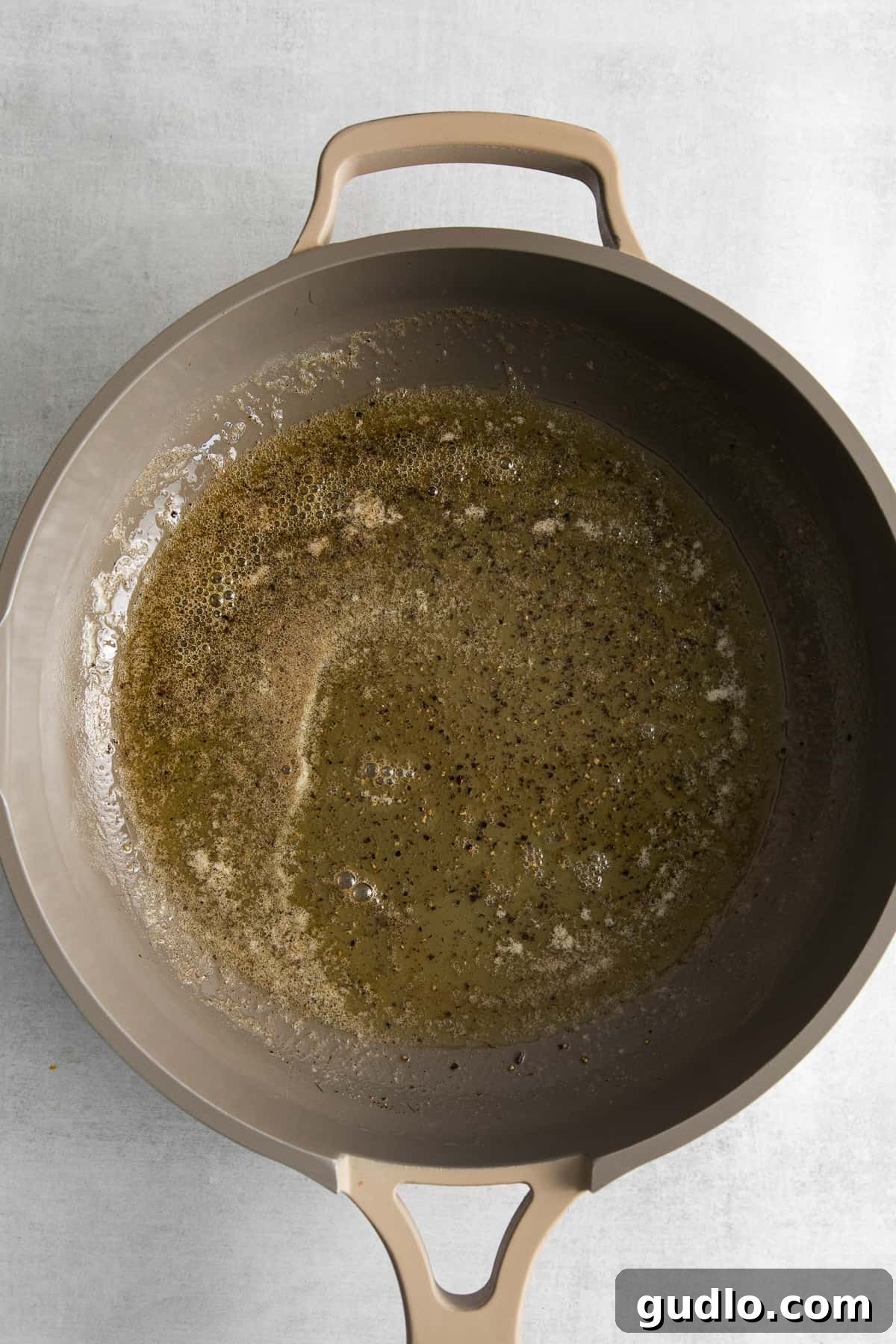
While your pasta is cooking, heat the olive oil and butter in a large, heavy-bottomed skillet or pan over medium heat. Once the butter has melted and the mixture is shimmering, add the freshly cracked black pepper. Cook the pepper for about 1-2 minutes, stirring constantly. This gentle toasting (or “blooming”) in the fat releases its aromatic oils and deepens its flavor, giving it a less harsh and more fragrant spice. Be careful not to burn the pepper, as this will make it bitter.
Step 3: Create the Creamy Emulsion
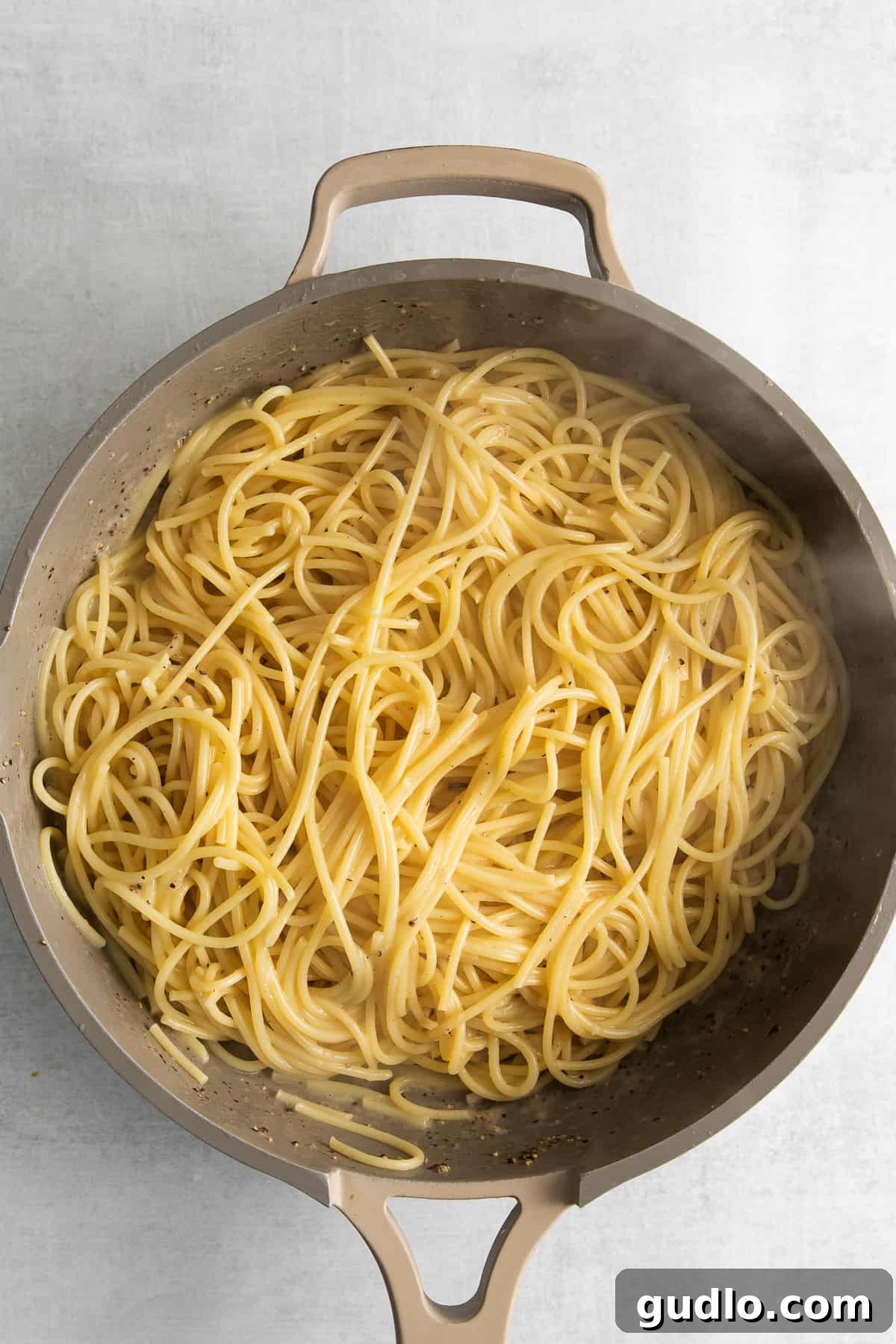
Add the cooked pasta directly to the pan with the toasted pepper mixture. Immediately add about ½ cup of the reserved starchy cooking water. Using tongs, toss the noodles vigorously and continuously for about 30 seconds. This helps coat the pasta and further emulsifies the sauce. Now, gradually begin adding the freshly grated Pecorino Romano (or Parmesan) cheese, a handful at a time, while continuing to toss and stir the pasta without interruption. The heat from the pasta and the remaining starchy water, combined with your constant movement, will melt the cheese into a luxurious, creamy sauce that clings to every strand. If the sauce appears too thick, add a tablespoon or two more of the reserved pasta water until you reach your desired consistency. The goal is a glossy, smooth, and emulsified sauce, not a clumpy or watery one.
Step 4: Serve Immediately
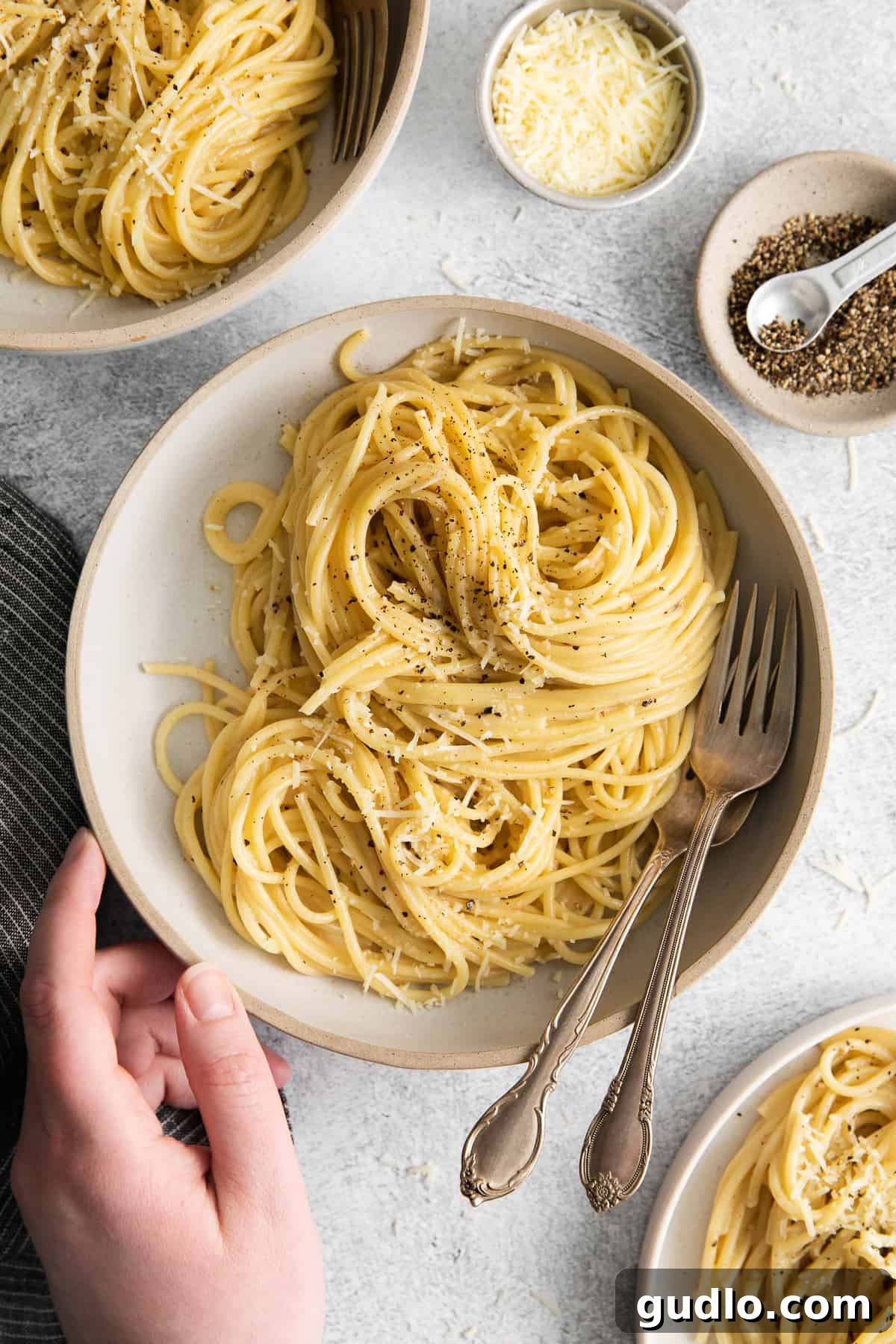
Once the cheese is fully melted and you have achieved a beautifully creamy sauce, your Cacio e Pepe is ready. Serve it immediately in warm bowls, ideally topped with an additional dusting of fresh Pecorino Romano and a final grind of fresh black pepper for an extra burst of flavor and visual appeal. Enjoy this Roman classic hot and fresh!
Choosing Your Canvas: Best Pasta Shapes for Cacio e Pepe
While Cacio e Pepe is traditionally made with long, thin pasta shapes, the beauty of this dish lies in its adaptability. The key is to select a pasta that can generously hold the creamy, peppery sauce. Here are some excellent pasta recommendations, each offering a slightly different textural experience:
- Spaghetti: The classic choice for a reason. Its long, slender strands are perfect for coating evenly with the rich sauce.
- Tonnarelli (or Bucatini): Tonnarelli is a square-shaped spaghetti common in Lazio, while bucatini is similar but hollow. Both offer a delightful chew and unique texture, allowing the sauce to seep into their centers.
- Angel Hair (Capellini): For those who prefer a more delicate bite, angel hair pasta works well, cooking quickly and absorbing the sauce beautifully.
- Fettuccini: Wider than spaghetti, fettuccini offers a broader surface area for the sauce to cling to, providing a hearty and satisfying mouthful.
- Mostaccioli: A tubular pasta, similar to penne but often smoother. Its ridges and hollow center make it great for capturing sauce.
- Cavatappi: These corkscrew-shaped noodles have a fantastic springy texture and plenty of nooks and crannies to trap the creamy sauce.
- Rigatoni or Penne Rigate: While not traditional, the ridged exterior and open ends of these short pastas make them excellent vessels for collecting the sauce, offering a satisfyingly rustic alternative.
Beyond Tradition: Exciting Variations and Additions to Your Cacio e Pepe
While Cacio e Pepe is perfect in its classic form, its simple foundation makes it an excellent canvas for creative culinary additions. Want to elevate your dish or make it a more complete meal? Here are some fantastic ideas to take this beloved pasta up a notch:
Add Protein for a Heartier Meal:
Any kind of cooked protein integrates beautifully. Consider pan-seared or grilled chicken breast, succulent shrimp, crispy pancetta or guanciale (traditional Italian cured pork cheek, offering an incredible depth of flavor), or even crumbled Italian sausage. Cook your protein separately and stir it into the pasta at the very end. The savory notes of these additions complement the peppery cheese sauce wonderfully.
Incorporate Fresh Greens:
Boost the nutritional value and add a refreshing element with some wilted greens. Spinach, kale, or Swiss chard are excellent choices. Simply wilt down 3 or 4 huge handfuls of your chosen greens in the pan after toasting the pepper, or add them directly to the pasta during the final tossing stage until they are just tender. The slight bitterness of kale, for example, can create a lovely contrast to the richness of the cheese.
Seasonal Sautéed or Roasted Vegetables:
Embrace seasonal produce to add color, texture, and flavor. Sauté or roast any of your favorite vegetables until tender-crisp. Broccoli florets, cauliflower, asparagus, zucchini ribbons, sweet peas, cherry tomatoes, or even thinly sliced mushrooms are fantastic additions. Add anywhere from 1 to 2 cups of cooked vegetables to the pasta during the final mixing stage. This not only makes the dish more robust but also introduces interesting textures.
A Hint of Heat:
For those who love an extra kick, a pinch of red pepper flakes toasted with the black pepper can add a pleasant level of heat, enhancing the overall spice profile of the dish.
Lemon Zest for Brightness:
A little freshly grated lemon zest can cut through the richness of the cheese, adding a bright, citrusy note that elevates the entire dish. Add it just before serving.
Storing and Reheating Your Cacio e Pepe
While Cacio e Pepe is best enjoyed fresh off the stove, you can certainly store and reheat leftovers. The texture might change slightly, as the sauce can thicken upon cooling, but it will still be delicious!
Once the Cacio e Pepe has cooled completely, transfer it to an airtight container. Store it in the refrigerator for up to 3-5 days. For best flavor and texture, consume within 2-3 days.
To Reheat This Pasta: Add the leftover Cacio e Pepe to a skillet or pan over low to medium-low heat. The sauce will likely be very thick. To revive its creamy texture, add a few tablespoons of chicken or vegetable broth, or simply water, to the pasta while it heats. Stir gently and continuously until the pasta is warmed through and the sauce has loosened and become creamy again. Avoid overheating, which can cause the cheese to separate. Top with additional freshly grated Pecorino Romano and a fresh crack of black pepper before serving for renewed vibrancy.
Explore More Irresistible…
Pasta Recipes!
If you’ve fallen in love with the simplicity and flavor of Cacio e Pepe, you’re in for a treat! Our collection of pasta recipes offers a wide array of comforting and delicious dishes, perfect for any occasion. From creamy sauces to hearty baked creations, there’s always a new favorite waiting to be discovered.
- Cream Cheese Alfredo
- Baked Ziti
- Baked Feta Pasta
- Baked Cream Cheese Pasta
Cacio e Pepe: The Roman Masterpiece
This simple yet elegant Cacio e Pepe pasta recipe brings the authentic flavors of Rome right to your kitchen. With minimal ingredients and quick preparation, it’s a creamy, peppery delight ready in just 15 minutes. Perfect for a delicious and fast meal!
By: Emily Richter
- Prep Time: 5 mins
- Cook Time: 10 mins
- Total Time: 15 mins
- Servings: 4
Ingredients
- 8 oz. spaghetti noodles (or bucatini, tonnarelli)
- 2 tablespoons high-quality olive oil
- 2 tablespoons unsalted butter
- 2 teaspoons freshly cracked black pepper (use whole peppercorns)
- 1 cup freshly grated Pecorino Romano cheese (or Parmesan, or a blend)
- 1 cup reserved starchy pasta water
- 1 teaspoon sea salt (for pasta water, adjust to taste)
Instructions
- Bring a large pot of generously salted water to a rolling boil. Add the spaghetti and cook according to package directions until al dente (about 8 minutes). Before draining, reserve at least 1 cup of the starchy pasta cooking water. Drain the pasta and set aside.
- While the pasta cooks, heat the olive oil and butter in a large skillet or pan over medium heat. Once the butter has melted, add the freshly cracked black pepper and cook for 1-2 minutes, stirring constantly, until fragrant. Be careful not to burn the pepper.
- Add the cooked spaghetti and ½ cup of the reserved cooking water directly to the pan with the pepper mixture. Toss vigorously with tongs for about 30 seconds to coat the pasta.
- Remove the pan from the heat (this helps prevent the cheese from clumping) and gradually add the freshly grated Pecorino Romano cheese, a handful at a time, while continuing to toss and stir the pasta constantly. The residual heat from the pasta and the starch in the water will melt the cheese and create a creamy, emulsified sauce. If the sauce is too thick, add more reserved pasta water, 1-2 tablespoons at a time, until you reach your desired consistency.
- Serve immediately, topped with additional freshly grated cheese and a final crack of black pepper, if desired.
Tips & Notes for Success
- Cheese Quality is Key: Always grate your cheese fresh! Pre-grated cheeses often contain anti-caking agents that prevent them from melting smoothly, resulting in a clumpy sauce. Freshly grated Pecorino Romano is essential for an authentic creamy texture.
- Pasta Water is Gold: Do not underestimate the power of starchy pasta water. It’s the emulsifier that creates the creamy, glossy sauce. Never drain all of it; always reserve more than you think you’ll need.
- Toss, Toss, Toss: Constant motion when adding the cheese is crucial for achieving a smooth emulsion. Don’t just stir; use tongs to lift and toss the pasta, distributing the cheese and water evenly.
- Temperature Control: If your pan is too hot when adding the cheese, it can seize or become grainy. Removing the pan from direct heat and relying on the residual heat of the pasta and water is often the trick to a perfectly smooth sauce.
- Any Pasta Works: While long pasta is traditional, feel free to experiment with other shapes. The most important thing is good quality pasta that can hold the sauce.
Nutrition Facts
Calories: 430 kcal,
Carbohydrates: 46 g,
Protein: 15 g,
Fat: 21 g,
Fiber: 2 g,
Sugar: 2 g
Nutrition information is automatically calculated and should only be used as an approximation. Actual values may vary based on ingredients and preparation methods.
Love this recipe? Leave a comment below!
Don’t forget to tag your beautiful creations on social media with the hashtag #cheeseknees. We absolutely love seeing what you’re cooking up in your kitchens!