
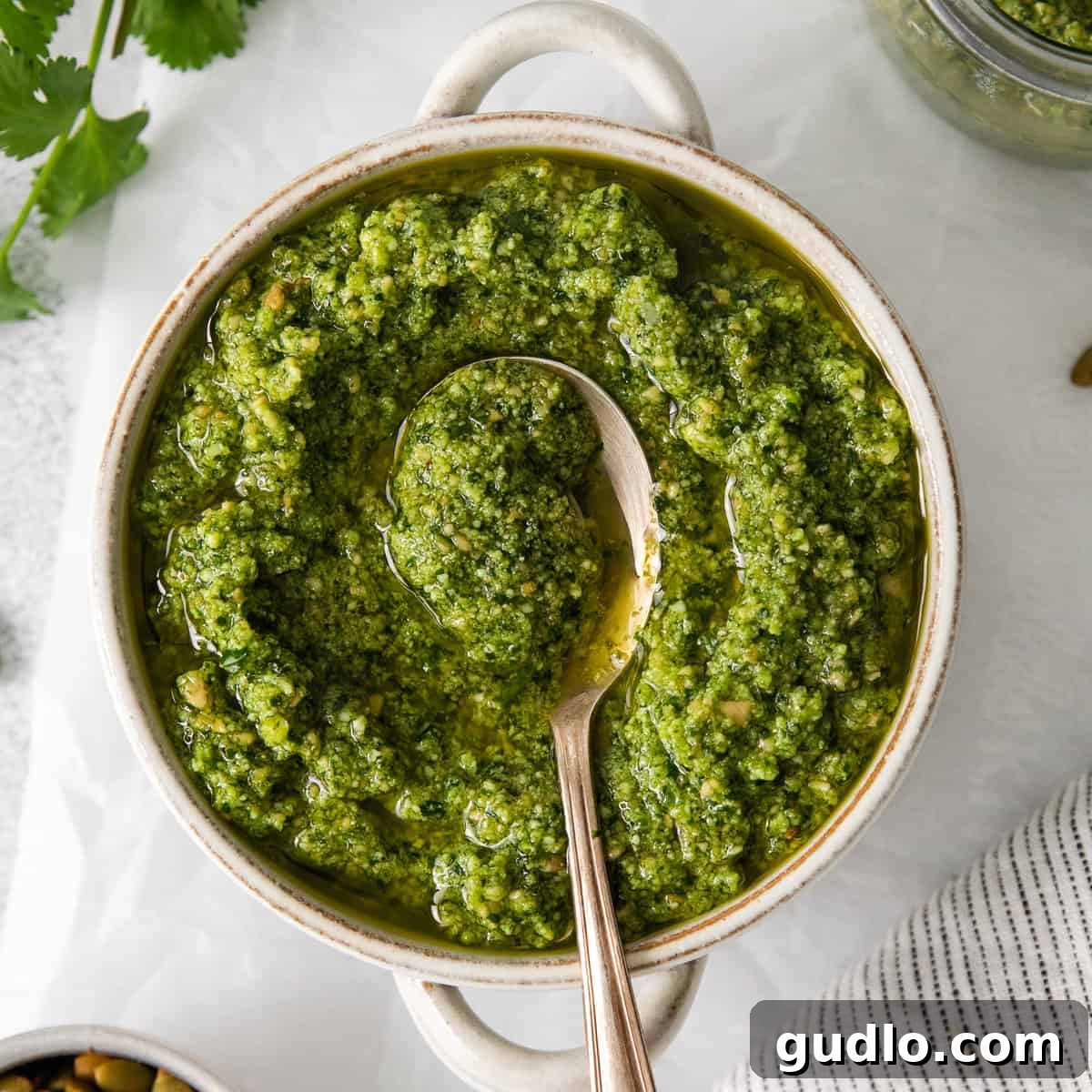
Elevate your culinary creations with this incredibly easy and remarkably flavorful cilantro pesto recipe. In just 10 minutes, you can whip up a batch of this vibrant green sauce that promises to be a game-changer in your kitchen. Its versatility knows no bounds, making it an essential staple for quick weeknight meals or impressive entertaining.
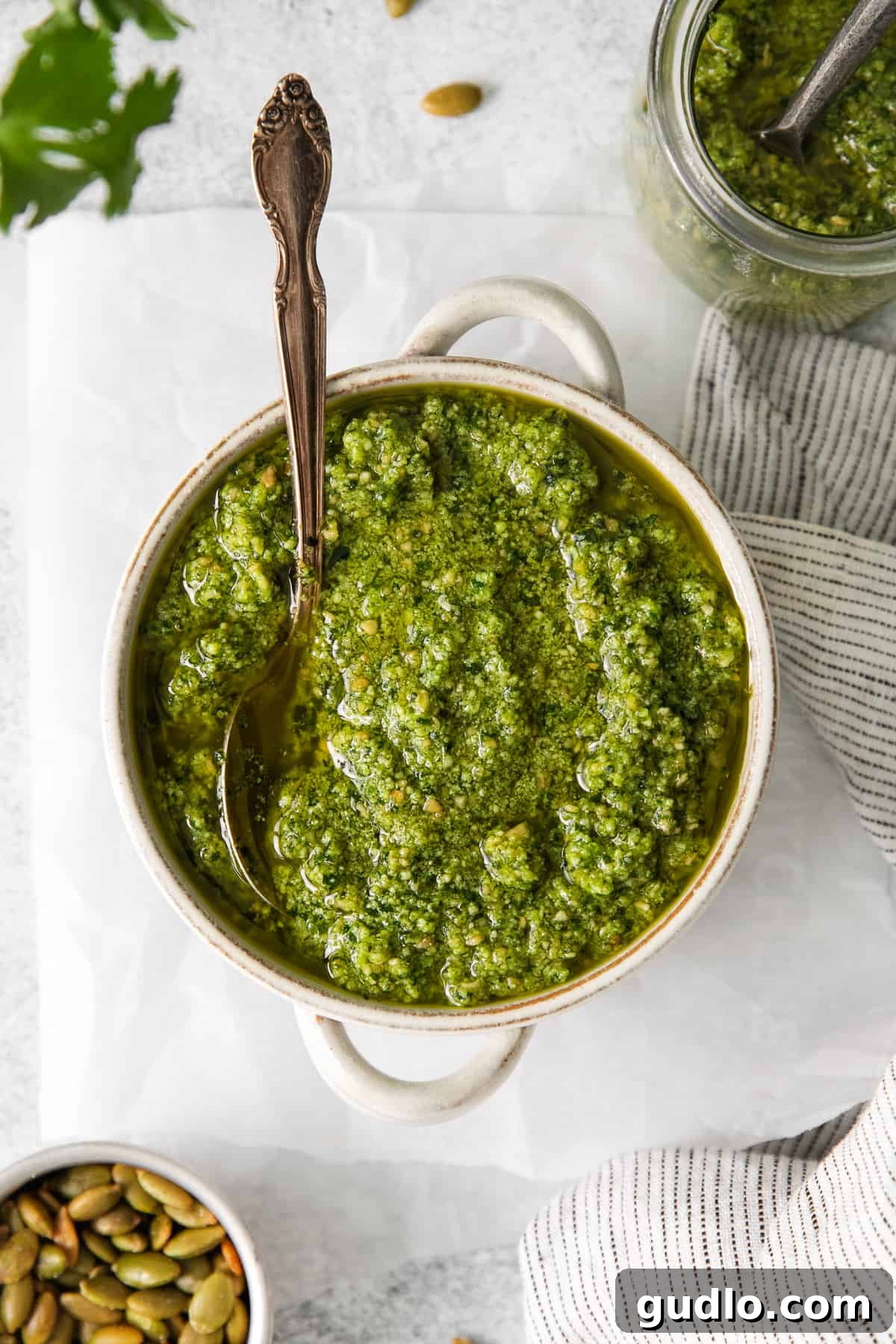
The Best Homemade Cilantro Pesto Recipe: A Flavor Revelation
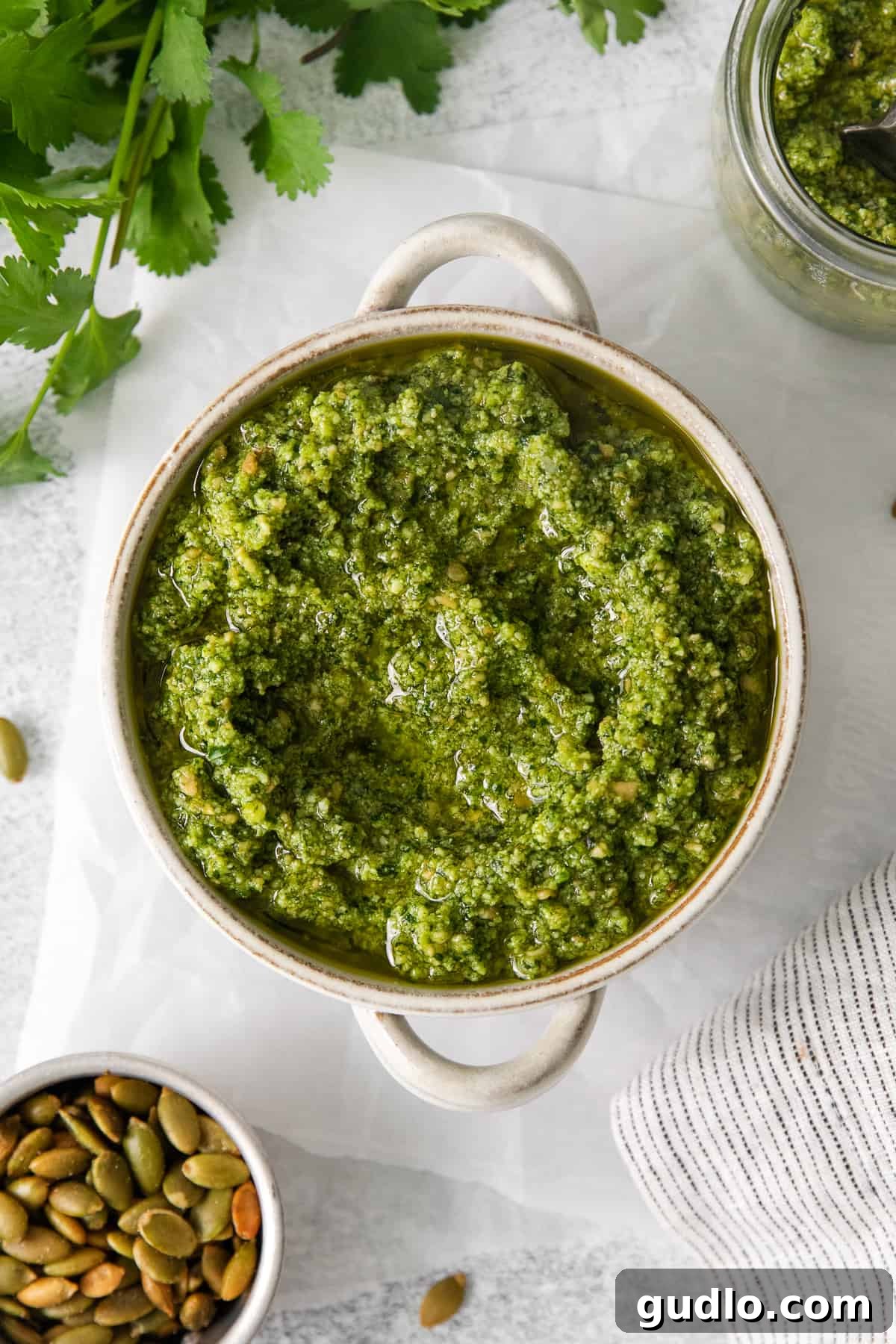
If you’ve yet to experience the delightful zing of cilantro pesto, prepare for a culinary revelation! This vibrant, fresh, and irresistibly aromatic sauce comes together with just 8 simple ingredients in a mere 10 minutes, proving that gourmet flavors don’t always require hours in the kitchen.
Unlike traditional basil-heavy pestos, our easy cilantro pesto builds its robust foundation on fresh cilantro, complemented by the nutty crunch of pepitas, the herbaceous notes of basil, and the salty, tangy depth of cotija cheese. This unique blend makes it an exceptionally versatile condiment. Imagine it tossed with your favorite pasta for a lightning-fast meal, spread onto sandwiches for an extra layer of zest, or even served as a vibrant dip for crunchy vegetables or tortilla chips. The possibilities are truly endless, and once you try it, you’ll wonder how you ever lived without it. Keep reading to unlock the secrets to making this incredible cilantro pesto and discover easy ingredient swaps to customize it to your personal taste.
What Exactly is Pesto? And What Makes Cilantro Pesto Unique?
Pesto, derived from the Italian word “pestare,” meaning “to crush” or “to pound,” is a renowned green sauce with roots in Genoa, Italy. Traditionally, it’s crafted by crushing fresh basil leaves, garlic, pine nuts, Parmesan cheese, and olive oil together in a mortar and pestle, yielding a fragrant, rich sauce.
What is traditional pesto made from? The quintessential ingredients for classic pesto Genovese include fresh basil, fragrant pine nuts, salty Parmesan cheese (often Parmigiano-Reggiano), fresh garlic cloves, and high-quality extra virgin olive oil. This combination creates a deeply aromatic and savory sauce that is a cornerstone of Italian cuisine.
However, the world of pesto is far from limited to its traditional form. Culinary innovation has led to countless delicious variations, allowing for endless creativity. You’ll find pestos made with other leafy greens like kale or spinach, different nuts such as walnuts, almonds, or cashews, and a variety of cheeses. Our cilantro pesto stands as a testament to this adaptability, offering a vibrant, zesty twist that draws inspiration from global flavors while retaining the beloved texture and versatility of classic pesto.
How do you serve pesto? Pesto is most famously known as a sauce for pasta, effortlessly coating noodles with its rich flavor. Yet, its utility extends far beyond. It serves as an excellent spread for sandwiches and toast, a flavorful marinade for chicken, fish, or vegetables, a vibrant base for pizza, or a dollop on soups and stews. For more inspiration, explore our delightful pesto pasta salad with burrata and our hearty pesto pasta with Italian sausage.
Featured Ingredients: Crafting Your Perfect Cilantro Pesto
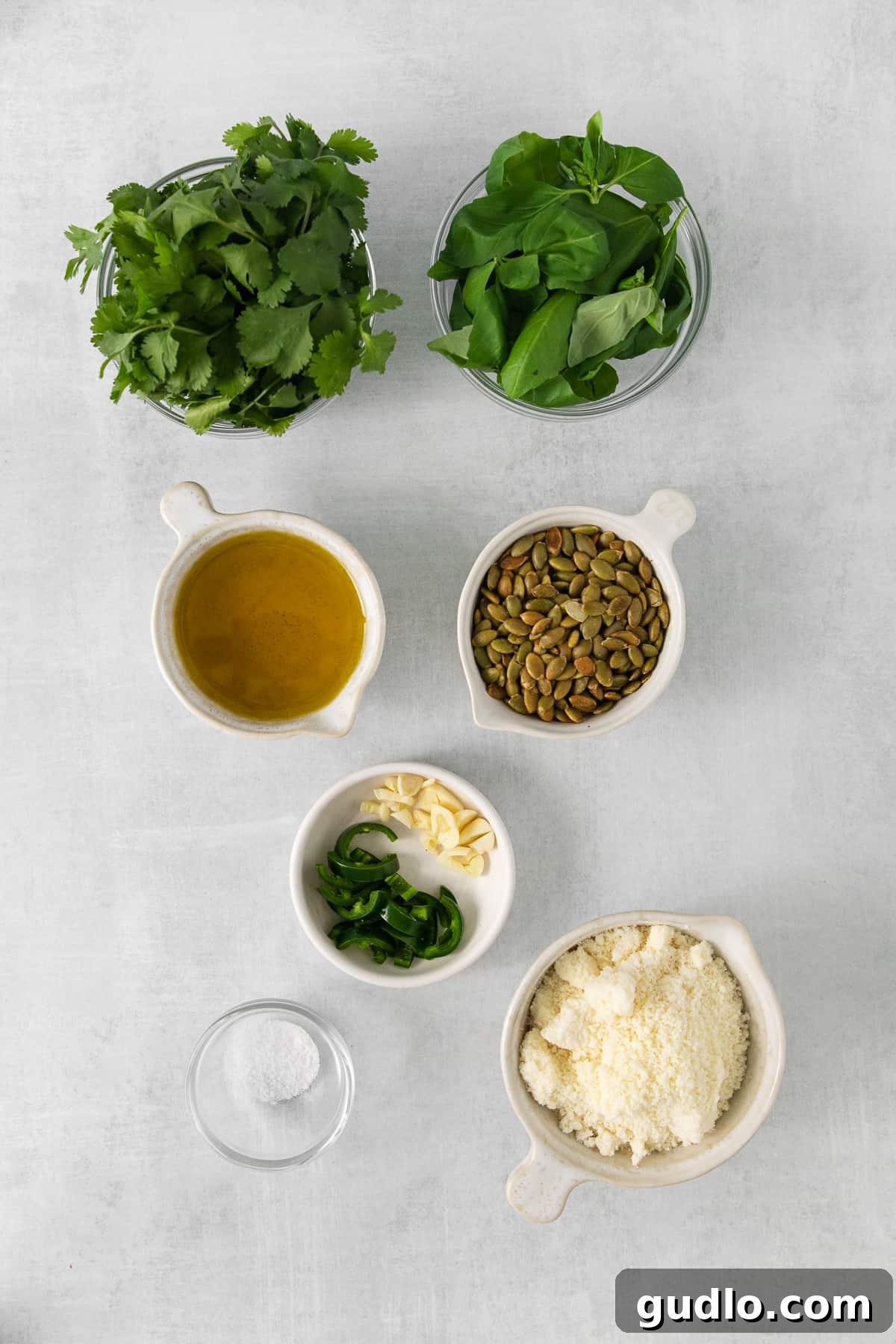
The beauty of this cilantro pesto lies in its thoughtful selection of ingredients, each playing a crucial role in creating its distinctive flavor and texture profile. Here’s a closer look at the stars of our recipe:
- Pepitas (Roasted & Salted): These small, flat, green pumpkin seeds are a fantastic addition, providing a delicate crunch and a savory, nutty depth that complements the other flavors beautifully. We specifically recommend salted and roasted pepitas as their pre-seasoned nature and enhanced texture elevate the pesto effortlessly. They offer a delightful alternative to traditional pine nuts, contributing a unique character.
- Fresh Cilantro: The undeniable hero of this recipe, fresh cilantro brings its signature bright, citrusy, and slightly peppery notes. For the best flavor and texture, ensure you remove the thick stems before processing, leaving only the tender leaves and thinner stems. Choosing vibrant, green bunches without wilting is key to a truly fresh-tasting pesto.
- Fresh Basil: While cilantro takes center stage, a touch of fresh basil grounds the pesto with its sweet, peppery, and aromatic qualities, bridging the gap between a classic pesto and our cilantro-forward variation. We use approximately 1.5 ounces of basil to ensure its flavor supports rather than overpowers the delicious cilantro.
- Jalapeño: For a subtle kick and a burst of fresh, green pepper flavor, a jalapeño is included. Its presence adds a layer of complexity without overwhelming heat. For those who prefer a milder pesto, simply remove the seeds and membranes, where most of the capsaicin (heat) resides. If you love heat, feel free to leave some seeds in, or even add a second jalapeño!
- Fresh Garlic: No pesto is complete without the pungent, aromatic essence of fresh garlic. We strongly recommend using fresh garlic cloves rather than granulated or powdered garlic to achieve the most authentic and robust flavor profile. Two cloves provide the perfect balance, enhancing all other ingredients.
- Cotija Cheese: This crumbly, salty, and slightly tangy Mexican cheese is the secret weapon that elevates our cilantro pesto to extraordinary heights. Its flavor harmonizes exceptionally well with cilantro, adding a rich, savory dimension that is distinct from Parmesan. Cotija’s crumbly texture also contributes to the desired slight grittiness of the pesto.
- Olive Oil: High-quality extra virgin olive oil forms the emulsifying base of the pesto, binding all the ingredients together into a cohesive sauce while imparting its fruity, peppery notes. While olive oil is traditional and highly recommended, you can substitute it with another neutral-flavored oil like grape seed oil if you prefer, though the flavor profile will shift slightly.
- Kosher Salt: A fundamental seasoning, kosher salt is crucial for enhancing and balancing all the flavors in the pesto. It brings out the best in the herbs, cheese, and nuts. Remember to start with a modest amount (like half a teaspoon) and taste as you go, adjusting to your preference. It’s always easier to add more salt than to remove it!
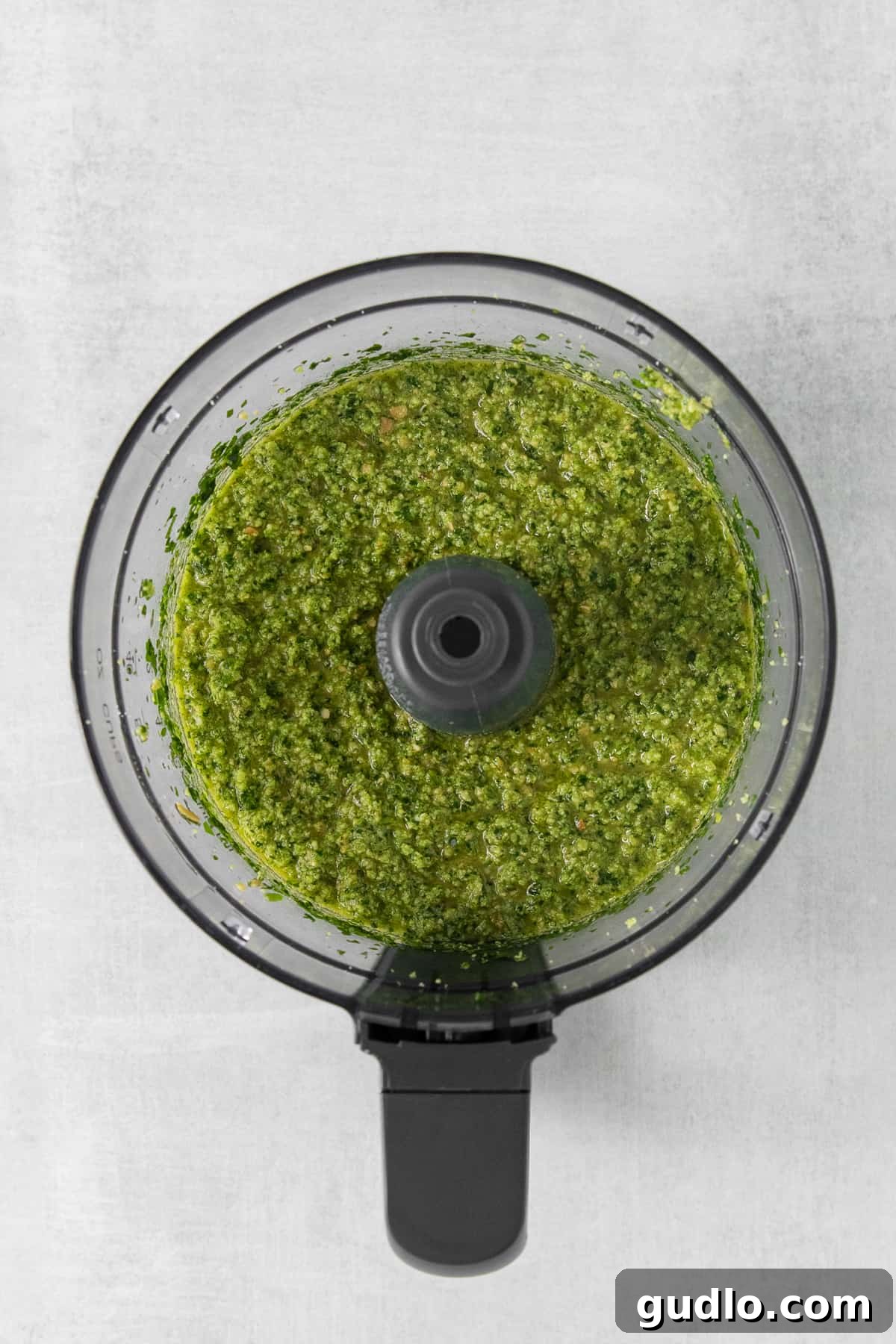
How to Make Cilantro Pesto: A Simple 3-Step Process
Creating this delicious cilantro pesto is incredibly straightforward, thanks to the efficiency of a food processor. Follow these simple steps for a perfect batch every time:
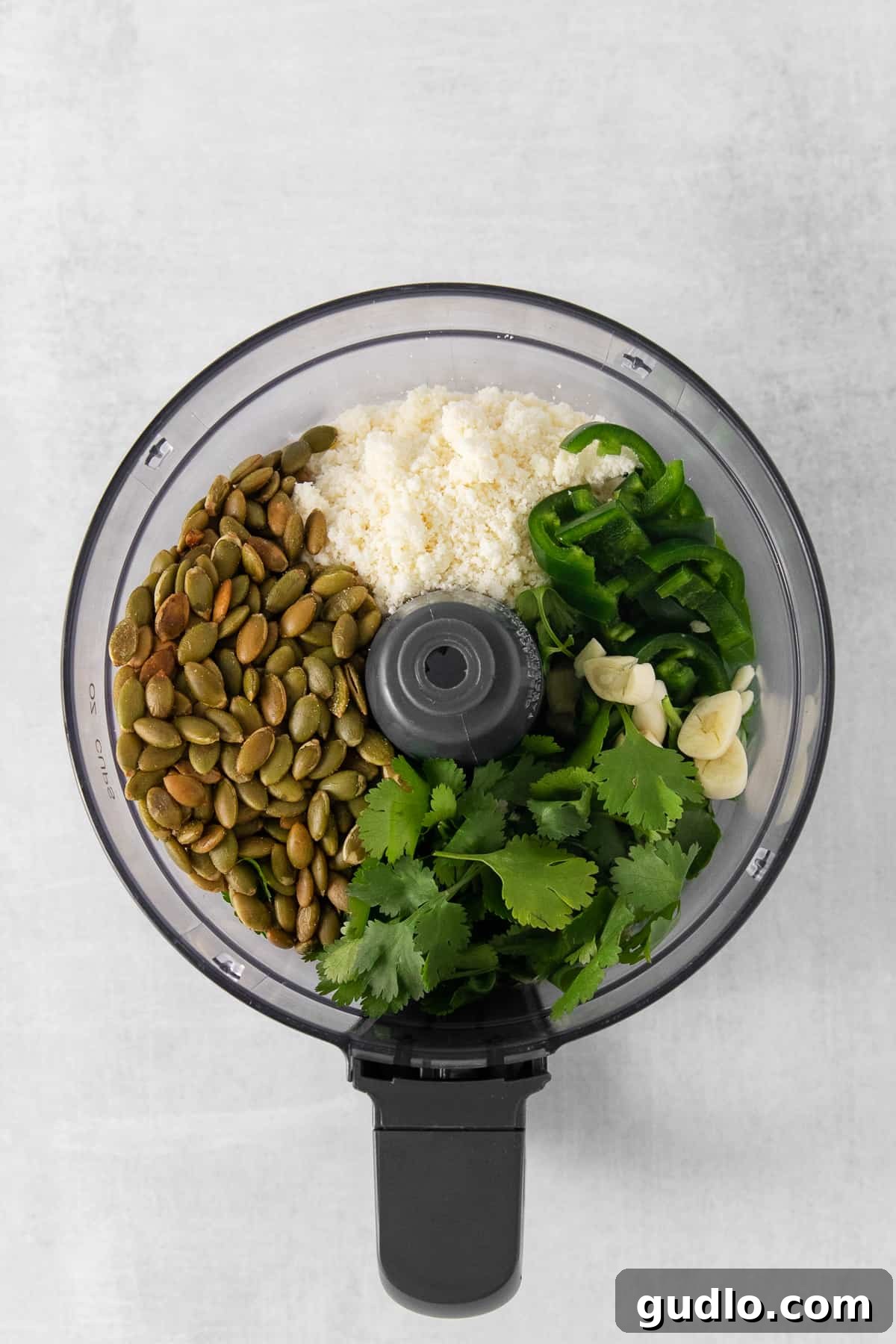
Step 1: Combine All Ingredients in a Food Processor
Begin by adding all your prepared ingredients—pepitas, de-stemmed cilantro, fresh basil, seeded jalapeño, garlic cloves, cotija cheese, kosher salt, and half a cup of olive oil—into the bowl of a food processor. Ensure all components are ready to go before you start blending.
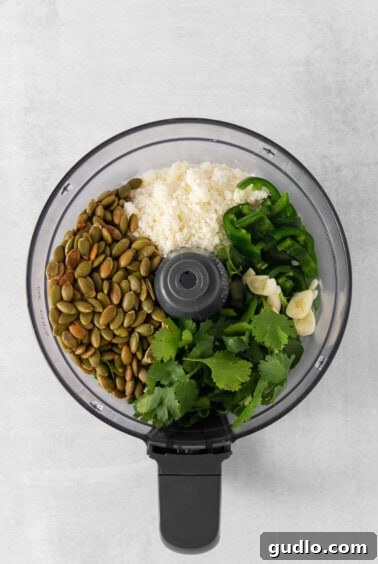
Once everything is in, secure the lid and process on high for approximately 60 seconds. The goal is a beautifully coarse yet well-combined mixture.
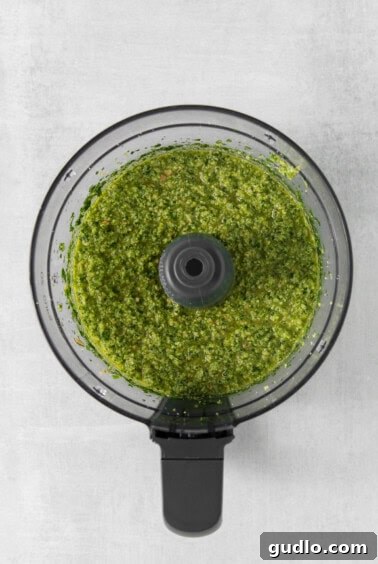
Pro Tip: Avoid over-processing the pesto. A slight grittiness from the nuts and cheese contributes significantly to its rustic charm and delightful texture. Over-blending can lead to a paste-like consistency, losing some of its authentic appeal.
Step 2: Adjust Consistency with Olive Oil
After the initial blend, check the consistency of your pesto. If it appears too thick for your desired use (e.g., for tossing with pasta), gradually add more olive oil, one teaspoon at a time. Briefly blend again after each addition until the pesto reaches your preferred thickness. This incremental approach ensures you don’t accidentally thin it out too much.
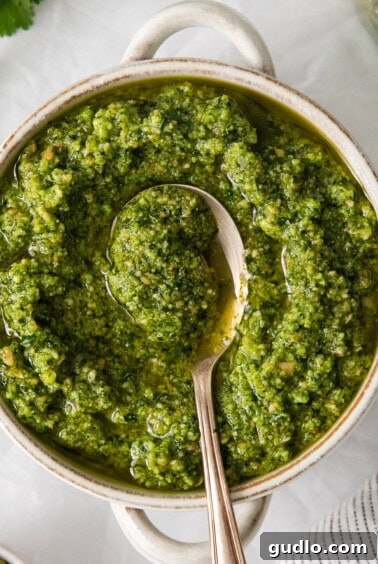
Step 3: Serve or Store for Later
Once your cilantro pesto has reached the perfect consistency and flavor, it’s ready to be enjoyed! Toss it generously with your favorite hot pasta, use it as a vibrant spread for sandwiches, a robust marinade for grilled proteins, or a fresh dip for crunchy vegetables and crackers. If you’re planning to savor it later, read on for our comprehensive tips on proper storage and how to freeze pesto to extend its freshness.
Easy Ingredient Swaps & Creative Variations
One of the beauties of pesto is its adaptability. Don’t be afraid to experiment with these simple swaps to tailor this cilantro pesto to your dietary needs or simply to explore new flavor combinations:
- Basil Alternatives: If fresh basil isn’t readily available, or you’re looking to change the flavor profile, feel free to substitute it with other leafy greens. Fresh spinach or kale (blanched first if using mature kale) can work wonderfully, offering a slightly different green base while maintaining the pesto’s texture.
- Nut/Seed Substitutions for Pepitas: Can’t find pepitas? No problem! Traditional pine nuts are always an excellent choice. Alternatively, for different flavor nuances and textures, consider using raw cashews (for creaminess), pecans (for a buttery depth), or almonds (for a mild, slightly sweet note). Roasting any of these nuts/seeds lightly before adding them will enhance their flavor significantly.
- Cotija Cheese Replacements: For those seeking a dairy-free version, nutritional yeast is an exceptional substitute for cotija cheese. It imparts a savory, cheesy flavor without any dairy. If dairy isn’t an issue but cotija is hard to find, good quality Parmesan cheese can be used in a pinch, though it will shift the flavor closer to a traditional Italian pesto.
- Olive Oil Options: While extra virgin olive oil is ideal for its flavor, a neutral-flavored oil such as grape seed oil, avocado oil, or even a light vegetable oil can be used. These options allow the flavors of the herbs and other ingredients to shine even more brightly, especially if you prefer a less pronounced olive oil taste.
- Spice Level: The jalapeño adds a mild, fresh heat. For more heat, leave some seeds in, or add a pinch of cayenne pepper or a small amount of serrano pepper. For less heat, omit the jalapeño entirely.
- Citrus Boost: A squeeze of fresh lime juice can brighten the entire pesto, enhancing the cilantro’s citrusy notes. Add it at the end, one teaspoon at a time, to taste.
Frequently Asked Questions (FAQs) About Cilantro Pesto
One of the most common culprits for bitter pesto is using old or rancid olive oil. Over time, olive oil can lose its fresh, fruity flavor and develop a bitter or harsh taste, which will transfer directly to your pesto. Always use fresh, good quality extra virgin olive oil. Another reason could be over-processing, which can sometimes extract bitter compounds from the herbs. Ensure you blend just until combined, maintaining a slightly coarse texture.
Making cilantro pesto is arguably one of the best ways to utilize leftover cilantro! It transforms a perishable herb into a versatile, longer-lasting sauce that can be frozen for months. Beyond pesto, you can also chop it and add it to salsas, guacamole, tacos, curries, or even blend it into smoothies for a fresh, herbaceous kick.
If your pesto turns out thicker than desired, simply add more olive oil, one teaspoon at a time, and briefly blend or stir until it reaches your preferred consistency. For an even lighter texture, you can also add a small amount of warm water from cooked pasta (if serving with pasta) or a squeeze of fresh lime juice. This method thins the pesto without adding more oil and can also help emulsify it further.
Absolutely! While cotija cheese adds a wonderful salty depth, you can easily make this pesto dairy-free. Simply omit the cotija cheese and replace it with 2-3 tablespoons of nutritional yeast for a cheesy, savory flavor. The texture might be slightly different, but the core flavors of cilantro, pepitas, and jalapeño will still shine through.
Yes, this recipe is inherently nut-free if you stick to pepitas, which are seeds, not nuts. If you opt for substitutions like pine nuts (which are technically seeds but often grouped with nuts), cashews, pecans, or almonds, then it would no longer be nut-free. Always confirm the allergen status of your ingredients if you have severe nut allergies.
Storage Tips for Fresh Cilantro Pesto
To keep your homemade cilantro pesto fresh and vibrant, transfer it to an airtight container immediately after preparing. For short-term storage, it can be kept in the refrigerator for up to 3-5 days. A helpful tip to prevent oxidation and keep the vibrant green color is to pour a thin layer of olive oil over the surface of the pesto before sealing the container. This creates a barrier against air, significantly extending its freshness and preventing browning.
How to Freeze Cilantro Pesto for Long-Term Freshness
Freezing pesto is an excellent way to preserve its fresh flavors and extend its shelf life, allowing you to enjoy homemade pesto year-round. It’s particularly useful for utilizing a large harvest of fresh cilantro and basil before they spoil. Here’s a simple method for freezing your cilantro pesto:
- Prepare for Freezing: Transfer your freshly made cilantro pesto into an ice cube tray. Fill each ice cube compartment approximately three-quarters full, using about 1 to 2 tablespoons of pesto per cube. This portioning makes it easy to thaw just the right amount for future meals.
- Flash Freeze: Place the filled ice cube tray in the freezer for at least 2 hours, or until the pesto cubes are completely solid. This flash-freezing technique prevents the cubes from sticking together when transferred.
- Transfer to Storage: Once fully frozen, pop the individual pesto cubes out of the tray. Transfer these frozen cubes into a freezer-safe airtight container or a heavy-duty gallon-size freezer bag. Ensure as much air as possible is removed from the bag to prevent freezer burn.
- Freeze for Months: Your frozen cilantro pesto cubes can be stored in the freezer for up to 3 months, maintaining excellent flavor and quality.
To Thaw Frozen Pesto: Thawing is incredibly simple. You can either let the frozen cilantro pesto cubes sit out on the counter at room temperature for about an hour until softened, or for a quicker method, transfer them directly into a nonstick skillet and gently defrost over medium-low heat on the stovetop, stirring occasionally until melted and warm. This method is perfect for adding directly to hot pasta or warm dishes.
More of Our Favorite…
Delicious Recipes Featuring Pesto
Pesto is a wonderfully versatile sauce that can elevate countless dishes. If you’ve fallen in love with homemade pesto, here are some other fantastic recipes where it truly shines:
- Pesto Pasta with Burrata: A creamy, fresh pasta dish that pairs the richness of burrata cheese with vibrant pesto for an unforgettable meal.
- Pesto Pasta with Italian Sausage: A hearty and satisfying dish, where savory Italian sausage perfectly complements the bright flavors of pesto and pasta.
- Easy Pesto Pasta from Fit Foodie Finds: For another quick and delicious pesto pasta inspiration, check out this simple recipe that highlights the classic flavors of pesto.
- Pesto Chicken & Veggie Skewers: Marinate chicken pieces and your favorite vegetables in pesto before grilling for a smoky, flavorful summer meal.
- Pesto Pizza: Skip the tomato sauce and use pesto as a base for your next homemade pizza, topped with fresh mozzarella, cherry tomatoes, and basil.
- Pesto Eggs: A trending breakfast idea! Fry eggs in a spoonful of pesto for an incredibly flavorful start to your day.
These recipes demonstrate just how diverse and impactful a simple batch of pesto can be. Don’t limit yourself – let your creativity flow and explore all the ways pesto can enhance your cooking!
Cilantro Pesto
Keep this easy cilantro pesto recipe in your back pocket. It takes 10 minutes to whip up and is so flavorful and versatile. Enjoy on pasta, as a marinade or a dip!
Prep: 10 mins
Total: 10 mins
Servings: 6
Ingredients
- ½ cup pepitas, salted and roasted
- 1 bunch cilantro, stems removed
- 1 cup fresh basil, ~1.5 oz
- 1 jalapeno, seeded (adjust to spice preference)
- 2 cloves fresh garlic
- 5 oz. cotija cheese, ~1 cup, crumbled
- ½ teaspoon kosher salt
- ½ cup extra virgin olive oil
Instructions
-
Place all of the ingredients (pepitas, cilantro, basil, jalapeño, garlic, cotija cheese, kosher salt, and olive oil) into a food processor.

-
Process on high for about 60 seconds, or until a coarse, well-combined mixture forms. Be careful not to over-process; a slight grittiness adds to the pesto’s charm and texture.
-
If your pesto is too thick for your desired use, add more olive oil, 1 teaspoon at a time, and briefly blend again until the desired consistency is reached.
-
Serve immediately with your favorite pasta, as a dip, or as a flavorful spread. For storage, see the notes below.
Tips & Notes
- Seeding the jalapeño will significantly reduce its heat, allowing for a mild, fresh pepper flavor. If you prefer no spice, the jalapeño can be omitted entirely.
- For brighter flavor, add a squeeze of fresh lime juice at the end, tasting as you go.
- To preserve the vibrant green color in storage, pour a thin layer of olive oil over the top of the pesto before sealing the container.
Nutrition
Carbohydrates: 2 g
Protein: 5 g
Fat: 26 g
Fiber: 0.4 g
Sugar: 0.2 g
Nutrition information is automatically calculated and should be used as an approximation.
Love this recipe? Leave a comment below!
We’d love to hear how your homemade cilantro pesto turned out. Don’t forget to tag your culinary creations on social media with the hashtag #cheeseknees. Share your serving ideas and delicious outcomes with our community!